
Regional Prevalence and Trends
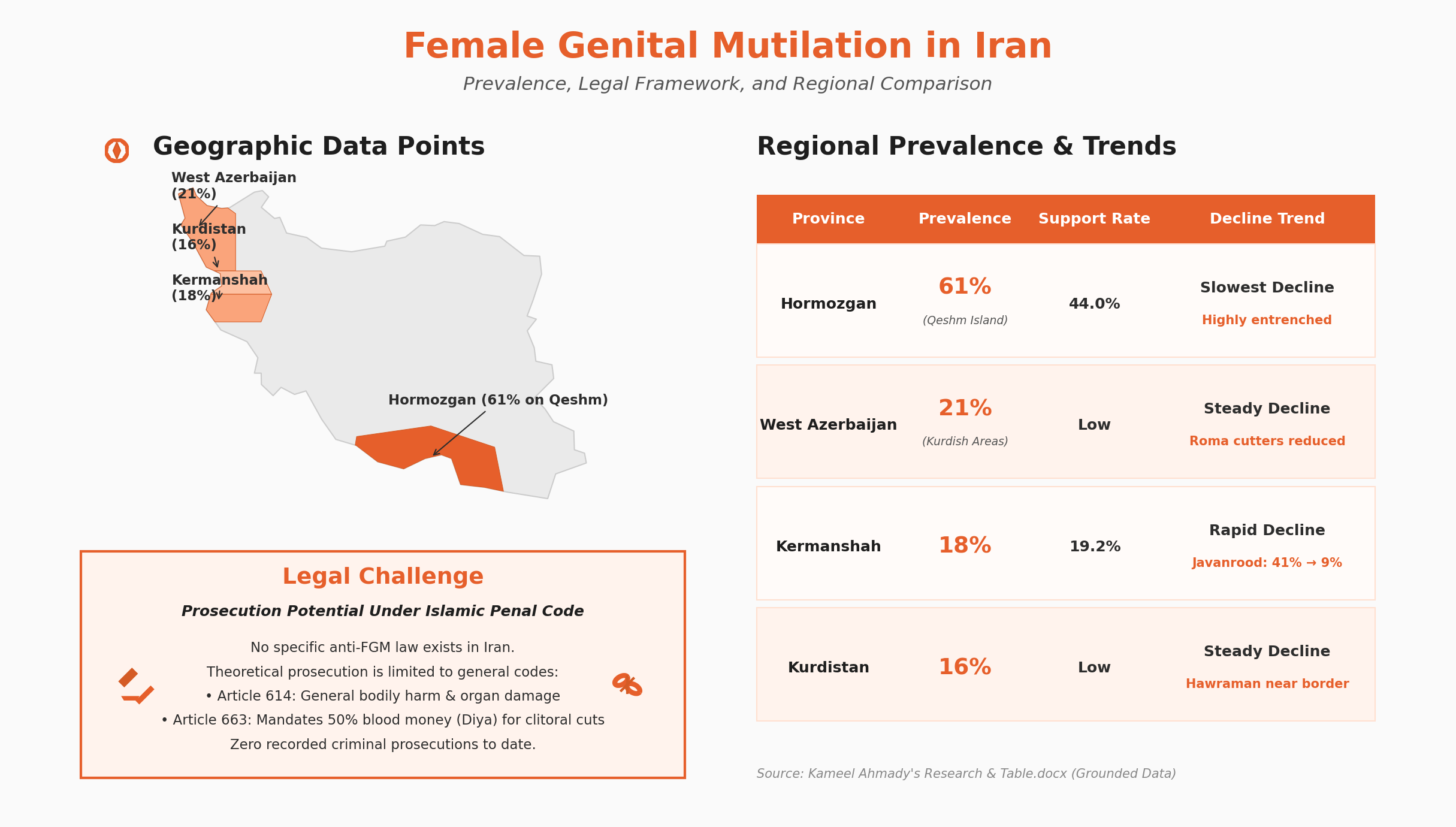
Extensive anthropological and sociological research conducted over the past two decades has revealed that Female Genital Mutilation (FGM) is practiced in specific regions of Iran, primarily concentrated across four major provinces: Hormozgan in the south, and Kurdistan, Kermanshah, and West Azerbaijan in the northwest.
However, this is officially unacknowledged. Iran does not feature standardized official government surveys tracking FGM. Therefore, the country is frequently omitted from global statistical prevalence tables, even though UN bodies like UNFPA and UN Women acknowledge that FGM occurs.
The practice is overwhelmingly concentrated among Sunni Muslim Iranians who adhere to the Shafi’i law school. They make up roughly 10% of the population in the Shia-dominated country. In regions where Shia and Sunni communities live in close proximity, such as certain villages in Hormozgan, minimal traces of the practice have been observed among Shia families who have adopted it as a local cultural norm.
Highest prevalence rates can be found in Hormozgan province, located in southern Iran along the Persian Gulf. On Qeshm Island, the largest island in the province, research identified an alarming 61% prevalence rate among women aged 30–49. Significant prevalence has also been documented on the mainland and surrounding islands, including Bandar Lengeh, Bandar Kang, Bandar Poal, Bandar Khamir, Gavbandi, and the islands of Hormuz and Larak (Ahmady, 2015). In the western Kurdish-populated provinces, prevalence is significant but slightly lower and more localized: studies from 2014 recorded prevalence rates of 21% in West Azerbaijan, 18% in Kermanshah, and 16% in Kurdistan (Orchid Project, 2026).
Encouragingly, longitudinal data reveals a steady decline in FGM among the younger generation. Across all four provinces, FGM prevalence is substantially higher among women aged 30–49 compared to young women and girls aged 15–29, reflecting progressive abandonment. For instance, in Piranshahr (West Azerbaijan), the rate is under 10% among the young generation; in Javanrood (Kermanshah), prevalence has dropped from 41% in older women to 9% in younger women; and in Ravansar (Kermanshah), it dropped from 43% to 17%. This decline is driven by expanding female education, the impact of anti-FGM media campaigns, and the deaths of traditional practitioners without replacement.
The physical procedures performed in Iran are predominantly classified as Type I (clitoridectomy), involving the partial or total removal of the external clitoral glans and/or the prepuce (Shafaati Laleh et al., 2022). In Hormozgan, for example, 87% of affected women experience Type I FGM, while Type II (excision) is the second most common type of cut. An extreme form of FGM known as infibulation (Type III), which involves the removal of the clitoris and labia majora is extremely rare but has been reported among older Arab-Iranian women in the southern areas of Khuzestan province.
Social Norms, Chastity, and Religion as Key Drivers
Referred to locally in Farsi and Kurdish as Khatne (circumcision) or Sonnat (tradition), the practice is historically viewed as an essential component of a woman’s moral character and a mandatory rite of passage into womanhood.
At the core of the social justification for FGM is the preservation of a girl’s virginity and the control of her libido (sex drive) before marriage (Dehghan, 2015; Shaygani et al., 2021). In traditional communities, FGM is viewed as a mechanism to suppress a woman’s sexual desire, thereby protecting family honor and preventing premarital sex (Shaygani et al., 2021; Bostani Khalesi, 2017). Conversely, uncircumcised girls are heavily stigmatized. In several villages, they are branded as ‘shameless,’ ‘indecent,’ or ‘unclean,’ confronting immense obstacles to finding a husband. In some rural areas, a woman who has not undergone Sonnat is believed to be religiously forbidden (not Helal); traditional beliefs dictate that she cannot prepare food, and anyone who eats food cooked by her hands or drinks water she has touched is committing a sin.
Religious beliefs play a prominent role in the practice’s continuation. FGM in Iran is associated with the Shafi’i school of Sunni Islam, which up to this day views female circumcision as obligatory.
Traditional Circumcisers and the Threat of Medicalization
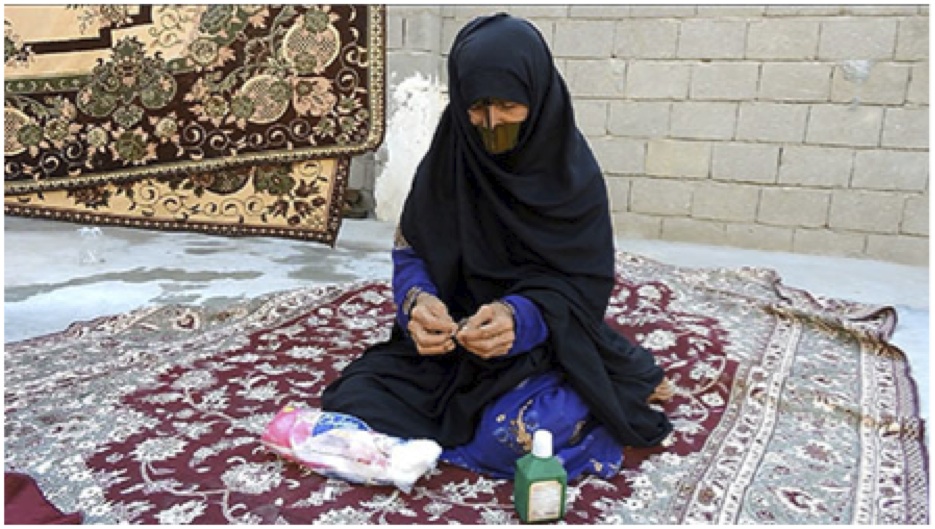
The performance of FGM in Iran remains almost entirely in the hands of traditional, informal practitioners, referred to locally as Bibis, mamas, or traditional midwives. These practitioners are typically older, illiterate village women who have inherited the practice from elder relatives and operate without any formal medical training. Procedures are carried out in domestic environments, without anesthesia, utilizing unsterilized tools such as sharp razor blades, cotton, and rudimentary disinfectants (Dehghan, 2015). The risk of severe acute complications—such as hemorrhage, infection, tetanus, and shock—is extremely high (Bostani Khalesi, 2017).
A unique geographic dynamic was identified in West Azerbaijan province, which historically relied on the seasonal migration of Gypsy/Roma groups crossing the border from Iraqi Kurdistan to perform cuttings in local villages. In recent years, tightened border controls and the gradual death of older resident cutters without younger replacements have led to a significant reduction in FGM rates in this province. In contrast, Kurdistan and Kermanshah provinces have historically relied on their own established, local Bibis, ensuring a higher degree of traditional continuity.
Rebranding of FGM as cosmetic surgery
An emerging and highly concerning trend in Iran is the commercial medicalization and rebranding of FGM. In several urban centers, private gynaecological clinics and beauty clinics have begun advertising clitoral surgeries under the pretext of ‘genital cosmetic surgery,’ sometimes explicitly using the term ‘female circumcision’ (Mozafarian & Srinivasan, 2022). By marketing these procedures as low-cost, modern cosmetic enhancements, these clinics encourage young women to undergo physical alterations that structurally resemble FGM, thereby exploiting commercial legal loopholes.
The response of the modern Iranian healthcare sector is constrained by limited clinical knowledge and training. A landmark 2017 study evaluating Iranian midwives’ knowledge and attitudes toward FGM revealed that only 20% of practicing midwives had good knowledge of FGM complications (Bostani Khalesi, 2017). Despite these clinical gaps, the study highlighted a powerful ethical consensus: 100% of the surveyed midwives strongly agreed that FGM must be stopped at all levels. (Bostani Khalesi, 2017).
Judicial Framework: Gaps in Specific Legislation
In the absence of a specific anti-FGM law, prosecutors and judges can theoretically seek convictions under the general provisions of the Islamic Penal Code (2013/2016) regarding assault and bodily injury. Multiple articles in the Penal Code have potential legal application:
- Article 614 (Book 5: Tazirat): Penalizes general physical assault and inflicting bodily harm that results in organ loss, damage, or disfigurement.
- Article 387: Defines a felony against a body organ as any injury short of murder, providing a legal basis to prosecute wounding or amputation of body parts.
- Article 663: Explicitly codifies financial compensation for clitoral damage, stating that ‘a half of a woman’s wergild [blood money or Diya] shall be required to be paid for incising and cutting off the clitoris’.
- Article 706: Makes it a crime to permanently eliminate or destroy the sexual capacity of a man or a woman, which is a direct consequence of clitoridectomy.
Additionally, legal basis for prosecution could potentially be derived from the Law on the Protection of Children and Adolescents (2020), which criminalizes physical acts that harm a child’s physical and psychological well-being as child abuse, and the Law of Women’s Rights and Responsibilities, which guarantees a woman’s right to a safe physical and psychological environment. However, despite the existence of these theoretical legal pathways, no criminal prosecutions have ever been recorded for FGM in Iran.
Civil Society: The Courageous Struggle
Iran has been the site of a vibrant civil society movement with several independent researchers and activists. When the British-Iranian social anthropologist Kameel Ahmady returned to Iran in 2005 he was was shocked to discover that clitoridectomy was practiced within his own Kurdish family. Recognizing the profound gap in public and academic knowledge, Ahmady and his team embarked on a decade-long study from 2005 to 2015, surveying and interviewing approximately 3,000 women and 1,000 men across Hormozgan, Kurdistan, Kermanshah, and West Azerbaijan. Parallel to Ahmady’s work, the sociologist Fatemeh Karimi published a book in 2010 on gender based violence with a focus on FGM: “Tragedy of the Body, Violence against Women.” Sociologist Rayehe Mozafarian did her own research and published the book “Blade and Tradition” (Tigh o Sonnat) in 2013. She then founded the group and website Stop FGM Iran. At the same time, several Iranian students started doing small-scale research on FGM in Iran, including Homa Ahadi, Paisa Rezazadeh Jalali, Elham Mandegari, and Fahimeh Hassanian, Farzaneh Daneshkhah.
As early as 2010, Rayehe Mozafarian collaborated with UNFPA, organizing a workshop on FGM in Shiraz. In 2014, she submitted a written statement to the UN Human Rights Council on FGM, and in 2015, presented on this topic at the 59th Session of the UN Commission on the Status of Women.
In the same year, she participated as a guest speaker in Iraqi-Kurdish Parliament for the Day of Zero Tolerance to FGM. Following, she was able to get governmental bodies interested and had several meetings with the ministry of women’s affairs and the national reference of children’s rights of justice ministry.
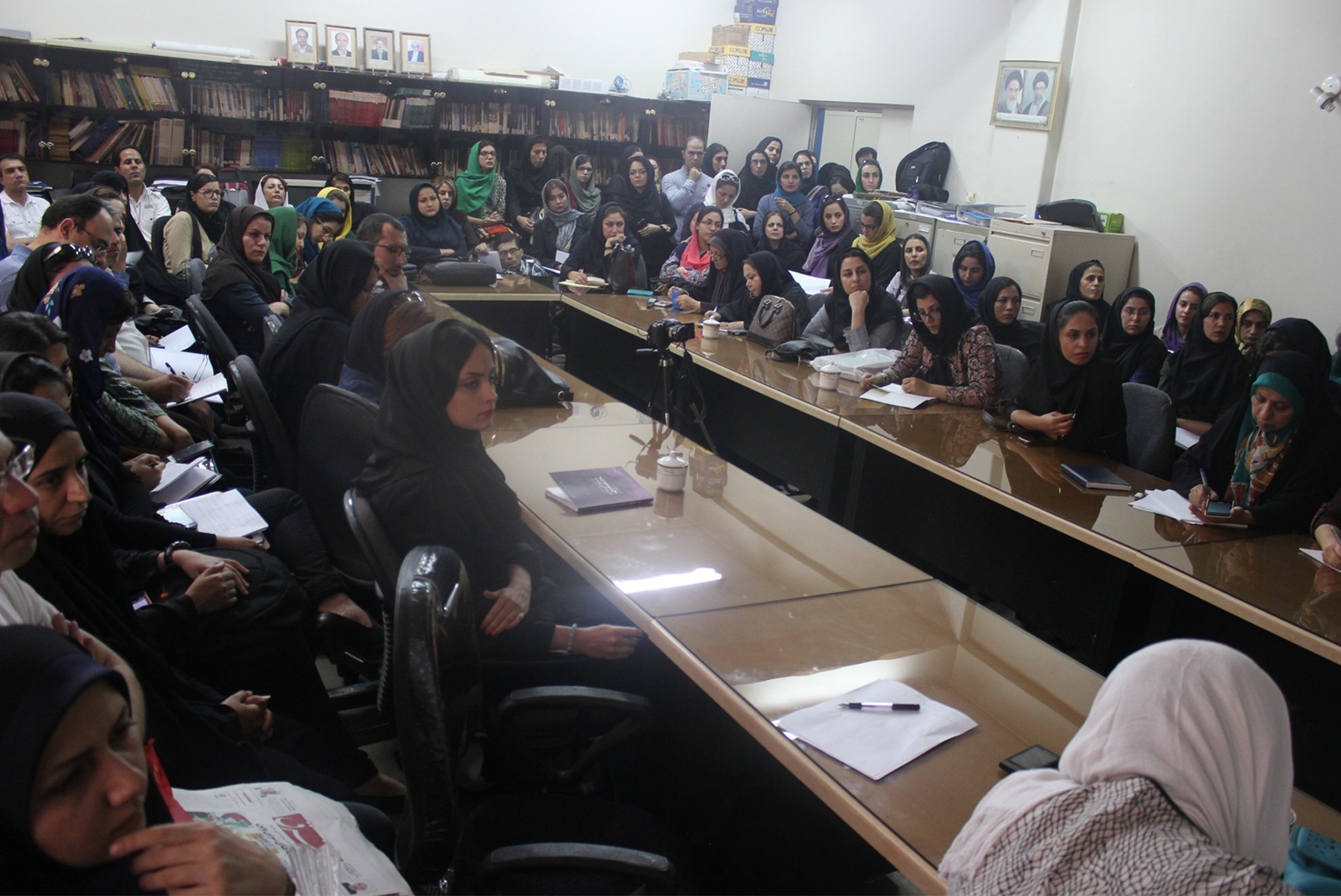
In July 2015, the University of Tehran (a public state-run university) and Iranian Campaign Stop FGM Iran held a conference on the subject of FGM, marking the first time that an official body connected to the government publicly remarked on this issue and governmental. Experts like Dr. Bokharayee, Dr. Akbary discussed the harmful consequences of FGM, the underlying reasons for FGM, and an analysis of the linkage between FGM and Islam.
Realizing the important role of religious leaders, Rayehe Mozafarian asked the Supreme Leader Ayatollah Khamenei’s view point. He issued a fatwa cautiously distancing himself from the practice without offending the Shafi’i position, stating: “Today, female genital mutilation is not common among Shiites but the usage narrative show that it does not hurt if it can be done … [in certain] conditions, including compliance with health issues. But because the social norms have changed today, this action would not be acceptable…”

In 2014, Radio Farda in collaboration with Stop FGM Iran did a 30-minute broadcast in Farsi in which victims of FGM spoke out about the practice and its harms in their personal lives. The Farda programm was a media-breakthrough. Other media outlets conducted interviews about FGM with Women’s rights activists such as Parvin Zabihi and Mehrangiz Kar. Iraqi-Kurdish television stations aired TV specials about FGM in the Kurdish regions of Iran. Also in 2014, the film “Almond” was released and shown at the Growth Film Festival of Tehran as well as international film festivals, which tells the story of a Kurdish woman in Iran struggling with the consequences of FGM.
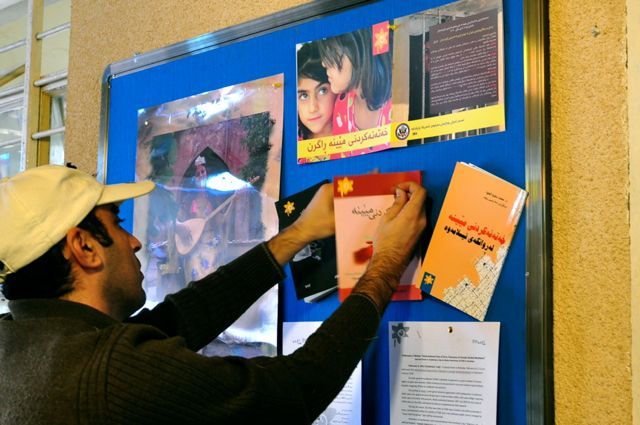
In 2015, an Iranian music video against FGM and forced marriage made by singer Chiman Rahmani was aired in most Kurdish TV. In the same year, the filmmaker and scriptwriter Reyhaneh Zahiri published the story book “Mother of cloth dolls”, one of the stories about Female Genital Mutilation in Iran. Kameel Ahmady published his ground-breaking study with many articles and papers following.
Other grassroots efforts were pushed by the Azarmehr Association of the Women of Kurdistan in Iran, an association working on women’s rights issues. Kurdish university students started an association against FGM – though they were not issued a permit to operate this association, this elevated the discussion on FGM in the Kurdish regions.
Recognizing that conventional community entry points were closed to them due to the taboo nature of the topic, mobile activist units developed creative, discreet strategies. They used traditional wedding and funeral ceremonies as safe gathering spaces to educate village women on the anatomical harms of excision. Campaign teams engaged in lobbying with local Kurdish and Sunni religious leaders, successfully convincing several prominent clerics to publicly declare that FGM is not a religious requirement.
Training psychology students in Kermansheh
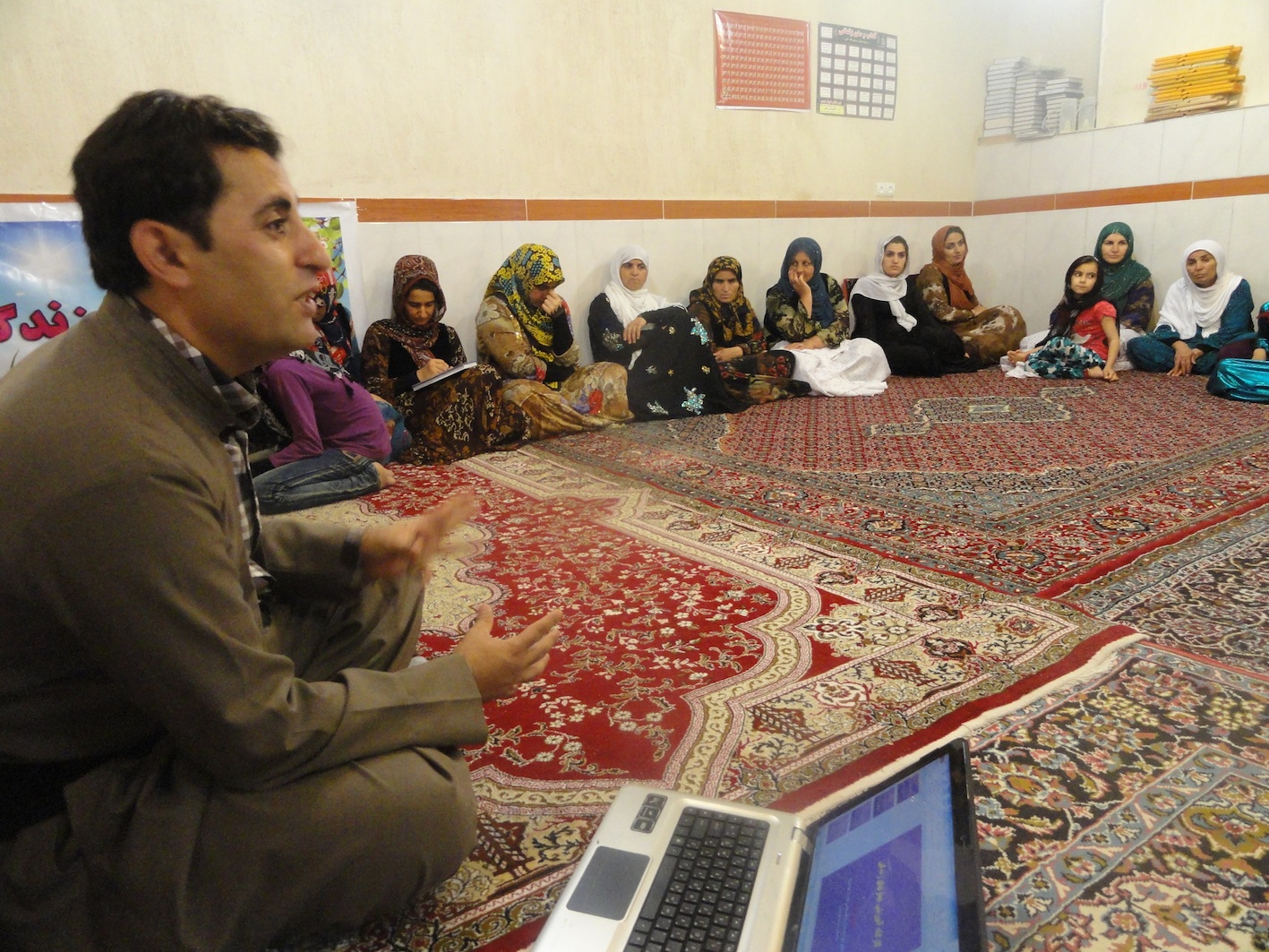
A remarkable success story of local civil society is the Hamraz Counseling Center in Javanrood (Kermanshah province), led by Dr. Osman Mahmoudi and Elham Hosseini. For over a decade, the center has been actively providing therapy, research, and educational outreach. In 2018 alone, Hamraz distributed over 2,000 FGM educational brochures and deployed 20 trained female educators, who conducted intensive face-to-face training for more than 2,000 girls and women across 15 rural and urban districts of Javanrud and Salas. These targeted pilot programs produced extraordinary, measurable declines in cutting rates. In Javanrood, FGM prevalence among the younger generation dropped from 41% to just 9% and in Ravansar from 43% to 17%. Most impressively, entire villages in Sanandaj and Kamyaran (such as Sarchi, Kule Sareh, and Masan) completely abandoned the practice after systematic civil society engagement. A local campaign against FGM has also been launched in the Kermansheh and Kurdish provinces in Iran including trainings for women on the harmful consequences of FGM.
Government ignores demands
Following the English publication of Ahmady’s research, many international news outlets caught wind of the practice of FGM in Iran bringing international attention to this issue. The UN has also begun putting pressure on Iran to address FGM. In June 2014, the UN Human Rights Council placed international pressure on Iran to recognize the occurrence of FGM within its borders and to seek to abolish it. In response to submissions by civil society, the UN Committee on the Rights of the Child expressed concern about FGM, calling on Iran to “take measures to enforce article 664 of the Islamic Penal Code and to stop, effectively, the practice of female genital mutilation throughout the country.”
However, while civil society activities first met friendly interest by the government, they soon started to be persecuted. The administrative environment for NGOs is highly restrictive: the Rules of Procedure for NGOs, passed by the Council of Ministers in 2016, enforces an extremely complex and invasive registration process. Organizations must be strictly ‘non-profit’ and ‘non-political,’ and applicants are subject to rigorous intelligence vetting. In August 2019, Kameel Ahmady was arrested by state security, detained in Evin Prison, and subsequently sentenced to nine years in prison on politically motivated charges, including ‘collaborating with hostile states’ and acting as a ‘CIA spy,’ primarily due to his research on FGM and early child marriage. Ahmady eventually escaped while on bail and fled the country. Furthermore, the government’s policy of denial remains unbroken: in July 2025/2026, the United Nations Universal Periodic Review (UPR) adopted several key gender justice recommendations submitted by human rights groups, but recommendations addressing the elimination and criminalization of FGM were ignored.
References
Ahmady, K. (2015). In the Name of Tradition: Female Genital Mutilation in Iran. UnCUT/VOICES Press, United Kingdom / Shirazeh Publication, Iran.
Ahmady, K. (2015). A comprehensive research study on female genital mutilation/cutting (FGM/C) in Iran, 2015
BBC (2021): Kameel Ahmady: British academic facing jail escapes Iran over mountains, 3.2.2021
Bostani Khalesi, Z. (2017). Iranian midwives’ knowledge of and attitudes toward female genital mutilation/cutting (FGM/C). Electronic Physician, 9(2), 3828-3832.
Ehssanpour, S. (2019). Criminalizing Female Genital Mutilation in Some Islamic Countries with focus on Iranian law. International Journal of Multicultural and Multireligious Understanding (IJMMU), 6(5), 1140-1146.
Equality Now. (2026). Gender Justice in Iran: UN UPR adopts our key recommendations, but FGM is still ignored. News and Insights, July 2026.
Esfandiari, Golnaz (2013): Female Genital Mutilation Said To Be Widespread In Iraq’s, Iran’s Kurdistan, Radio Free Europe, August 14, 2013
Hosseini E., Mahmoudi O. (2017): Psychosexual Complications of Female Genital Mutilation for Couples: A Comparative Study, Journals of Kermanshe University of Medical Science, 2017
Hosseini E., Mahmoudi O. (2018): The relationship between honor-based violence and female genital mutilation in Javanrod county, International Journal of Health and Life Sciences, 2018
Mahmoudi O. (2014). Tackling FGM in Iran: Education about FGM during life skill classes for housewives, 5.8.2014
Mahmoudi, O. (2015). FGM impedes men’s well-being, 9.10.2015
Mahmoudi, O. (2015). Educational Booklet on FGM in Persian
Mohajer, Fariba Davoudi (2010): Female Circumcision: Elegy for a Dream, Goozar, August 2010
Mozafarian, R., & Srinivasan, D. (2022). Ending FGM in Iran needs International Support. Fair Observer, 17 February 2022.
Mozafarian, R. (2014): The point of view of the Supreme Leader of the Islamic Republic of Iran on Female Genital Mutilation, June 2014
Mozafarian, R. (2014): Hormozgan, Iran: Meetings with scholars on FGM, Stop FGM Middle East, November 2014
OIC-IPHRC. (2025). Independent Permanent Human Rights Commission Statement on the International Day of Zero Tolerance for Female Genital Mutilation 2025. Jeddah, 6 February 2025.
Orchid Project. (2026). The Law and FGM/C: Iran.
Rahmani, Chiman (2015): The One of the Thousands, song, 2015
Shafaati Laleh, S., Soltani, F., & Roshanaei, G. (2022). Female Genital Mutilation, Sexual Quality of Life and Marital Relationship: A Case-Control Study From Iran. Journal of Family and Reproductive Health, 16(4), 264-271.
Shaygani, F., Zahedroozegar, M. H., Honarvar, B., & Shaygani, M. R. (2021). Eradicating female genital mutilation in Iran: actions to be done. Archives of Iranian Medicine (AIM), 24(11), 856-857.
Stop FGM Middle East. (2014). FGM in Iran: Blade of Islam or patriarchal custom – Radio Farda 30-minutes special broadcast, 2014.
Stop FGM Middle East. (2019). New Awareness Brochures against FGM distributed in Kurdistan-Iran. May 2019.
Stop FGM Middle East (2016): Survey: Majority of religious leaders pro FGM in Kermansheh, Iran, August 2016
Stop FGM Middle East (2016): How a religious ruling seems to have stopped FGM in the 1950s in Ahwaz, Iran, August 2016
Stop FGM Middle East (2015): They call it tradition because they believe it is a prophetic tradition, 14.12.2015
Stop FGM Middle East (2015). Tehran University organized first conference on female genital mutilation, 3.8.2015
Stop FGM Middle East (2014): Iranian Film “Almond” tackles FGM, December 2014
Südwind Magazin (2014). Violations of Girls’ Rights: Child Marriage and FGM in the I.R. Iran, 2014
The Guardian (2015). Female genital mutilation practised in Iran, study reveals. The Guardian, 4 June 2015