Home » News by Others
News by Others
“The work to combat female genital mutilation begins with trust”
16.5.2026
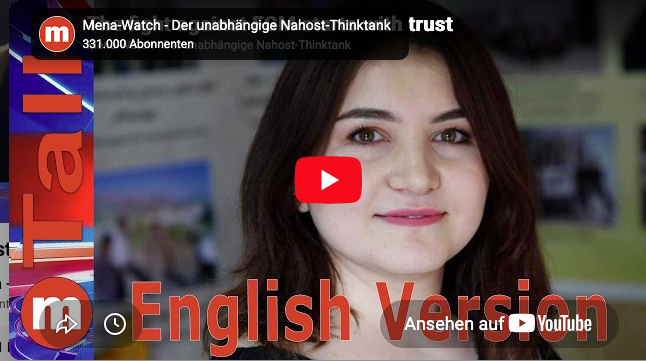
Shokh Mohammad from Wadi e. V. talks about her work in the Kurdistan Region of Iraq and the fight against female genital mutilation.
By Jasmin Arémi, Mena-Watch
In the Autonomous Region of Kurdistan in Iraq, the practice of female genital mutilation (FGM) remains a reality. Although the figures are falling – partly due to legislation passed and a social attitude that is slowly changing – FGM nevertheless remains part of a social system deeply rooted in family, religious and cultural structures. Raising awareness about FGM and talking about it therefore means more than just discussing violence against women’s bodies. It is also about community, control, shame and the fear of social exclusion.
Shokh Mohammad knows these dynamics all too well. “My name is Shokh Mohammad, I am 31 years old,” she says at the start of the conversation. She has been working for Wadi e. V. since 2015, a German-Iraqi organisation that has been active in northern Iraq since 1993. The focus was initially on humanitarian aid, development work and support for women and children in crisis regions.
Religious and social pressure
The issue of FGM arose from an observation that initially seemed insignificant. In the rural areas of the Kurdish Autonomous Region, many girls were missing from nursery schools. Research eventually revealed that these girls were being prepared for the practice of FGM.
The NGO’s initial investigations revealed just how deeply the practice was embedded in society. In some villages, almost all girls were affected. In the Garmian region (in the south-east of the Kurdish Autonomous Region), the rate was as high as 80 per cent. Later, the Ministry of Health of the Kurdistan Autonomous Region also confirmed a prevalence of 42 per cent, although this figure is likely to be an underestimate. This is because FGM is traditionally not discussed, and the procedures take place in secret.
The procedure usually takes place within the context of close family and social ties and is closely linked to local social pressure. The fact that it can be discussed publicly at all today is the result of years of political work. Wadi raised awareness of the issue, collected data, organised campaigns and increased pressure on policymakers. In 2011, FGM was finally banned by law. At the same time, the practice continues, particularly in remote rural areas.
FGM encompasses various forms of female genital mutilation. The World Health Organisation distinguishes between four types. These range from the partial or complete removal of the clitoris and clitoral hood, to procedures involving the labia minora, to the narrowing of the vaginal opening or other harmful and injurious practices. In the areas studied, types I and II are particularly prevalent.

The procedures are often downplayed, even though the health consequences are serious. They lead to bleeding, infections, chronic pain and complications during childbirth. The psychological consequences are equally profound, often resulting in severe trauma. Particularly destructive is the damage to trust in those closest to the victim – mothers, grandmothers or aunts – who usually accompany this violence and initiate it themselves. The injury thus becomes part of family normality. Many victims therefore suffer from anxiety and trauma. Their own bodies become a place of remembrance for an experience that is never fully resolved.
The reasons behind the practice are complex and, at the same time, contradictory. Religious beliefs play a part, as do traditional notions of purity and patriarchal control mechanisms. Above all, however, there is social pressure within communities where FGM is still regarded as a prerequisite for social acceptance. Consequently, it is often not individual conviction that is the primary factor, but the fear of being excluded.
Tangible change
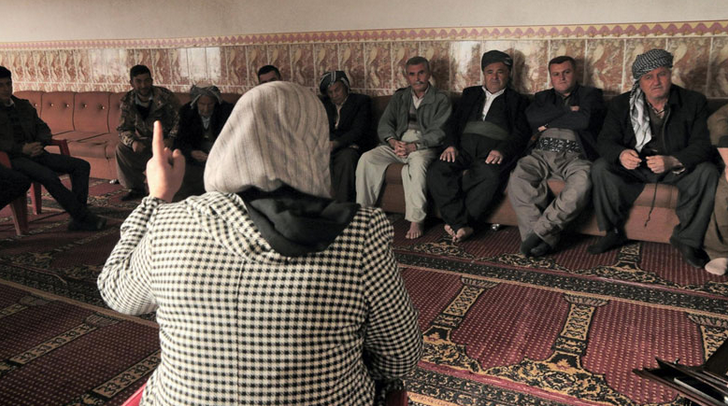
And yet, things are changing. Younger women in particular are increasingly rejecting the practice, not least because many have experienced it themselves and are aware of the consequences. This generational shift in experience is central to Wadi’s work. The organisation focuses on long-term education, dialogue and a presence within the communities. Social workers and lawyers regularly travel to rural areas to discuss health risks, legal consequences and women’s rights. This is not just about the practice of FGM itself, but about a broader understanding of violence and self-determination.
The so-called ‘FGM-free villages’ represent a significant success. Following intensive collaboration, twelve communities have publicly committed to abandoning the practice – and have made this commitment visible. This process was only made possible through months of trust-building. Shokh describes how this change is having an impact using a remarkably simple mechanism of social dynamics: » When some communities saw that their neighbouring villages had discussed the issue and that there were no further problems, they contacted us again.” When it becomes clear that change is possible without destroying social cohesion, things begin to shift.
The organisation therefore also works with religious authorities and state institutions, seeking to secure clear stances against FGM. This includes the Ministry of Religious Affairs as well as local authorities. At the same time, international support remains crucial at the political, financial and public levels. Today, the programme is entering a new phase. Whilst prevention and awareness-raising are showing initial success, the focus is increasingly shifting towards supporting affected women. This is because many live with long-term physical and psychological consequences and require medical and psychosocial support.
First published on Mena-Watch
Female genital mutilation driven by local customs in southern Iran – study
14.12.2025 By Iran International
A study on female genital mutilation (FGM) in Iran’s southern Hormozgan province finds the practice is sustained chiefly by family dynamics, gender stereotypes and local customs that often outweigh religious mandates.
Published by researchers at Islamic Azad University, the peer-reviewed paper appears in Social Problems of Iran (Autumn 2025) and uses grounded-theory interviews with 15 women (2022–23) to map causal drivers, intervening factors, strategies, and outcomes.
The authors report that cutting persists within kinship networks that link family honor to control over female sexuality, while misinformation and limited access to alternative medical or religious views reinforce continuity.
“The central category indicates the impact of religious and family institutions in the continuation and reproduction of the traditional pattern,” the paper said, adding that “local customs outweigh religious mandates, with religion serving more as a legitimizing discourse.”
They say women’s responses evolve from silence and avoidance in childhood to negotiation, alliance-building and seeking medical advice in adulthood, with education, urbanization and social-media advocacy widening pathways to change.
Reported outcomes include physical pain, reduced sexual satisfaction, traumatic recall and social withdrawal. “FGM causes physical, sexual or psychological harm or suffering to women.”
According to the paper, common misconceptions about the practice include beliefs that FGM preserves a girl’s “purity,” prevents immoral behavior or is a religious obligation.
“I had no idea what circumcision was until they did this to us,” said one 42-year-old participant.
Another woman described the experience as sudden and violent. “I was confused and completely unprepared. Like a chicken you grab to slaughter. Two female relatives held me down, tightly gripping my arms and legs, and then they took out the blade.”
FGM is practiced in several regions of Iran, particularly in western and southern provinces including Hormozgan, Kordestan, Kermanshah, West Azarbaijan, Ilam and Lorestan.
There is no comprehensive national data on its prevalence, but small-scale studies have reported varying rates across these areas.
The most common form documented in Iran is Type I FGM, involving partial or total removal of the clitoris or prepuce. Procedures are typically carried out by traditional midwives or elderly women using basic tools such as razor blades, often without anesthesia.
Iranian law does not explicitly criminalize FGM. There have been no known prosecutions, and official responses have largely been muted.
First Published by Iran International
New Report finds Female Genital Mutilation/ Cutting in 94 countries
25.2.2025 By End FGM EU
Geneva, Switzerland, February 25, 2025 – A new report has collated evidence of female genital mutilation/ cutting (FGM/C) in 94 countries, revealing how this harmful practice exists in more communities than previously recognized and the number of girls and women affected or at risk exceeds earlier estimates.
Efforts to end FGM/C remain hindered by reluctance from governments to act, particularly in countries not widely associated with FGM/C. Other obstacles include weak legal protections, insufficient data, low awareness, and a lack of funding and decisive action from the international community.‘The Time Is Now: End Female Genital Mutilation/Cutting, An Urgent Need for a Global Response – Five Year Update,’ by the End FGM European Network, Equality Now, and The U.S. Network to End FGM/C compiles evidence about the nature and practice of FGM/C in different countries. Small-scale surveys, estimates, and personal accounts from survivors, activists, and grassroots organizations shed new light on the urgent need to expand protection and prevention efforts.
The research follows up on the group’s 2020 report that documented how the extent of FGM/C was being woefully underestimated globally. Since then, FGM/C has been identified in local communities in Azerbaijan, Cambodia, and Vietnam, and further evidence has been gathered in Colombia, Malaysia, the Philippines, Saudi Arabia, Sri Lanka, and the United Arab Emirates. More investigation is required where data is limited, such as in Panama, Mexico, and Peru where FGM/C may exist among indigenous groups.
“Mounting evidence clearly shows that FGM/C is a worldwide issue demanding a coordinated global response,” says Equality Now’s Divya Srinivasan. “To end FGM/C, governments, international bodies, and donors must acknowledge the extent of the problem, strengthen their political commitments to addressing it, and prioritize funding, especially in overlooked regions and communities.”
Ending FGM/C requires better data and more funding
In 2020, UNICEF estimated at least 200 million women and girls had undergone FGM/C in 31 countries. In 2024, UNICEF updated the figure to over 230 million—80 million in Asia, 6 million in the Middle East, and 1 to 2 million in small or diaspora communities elsewhere. UNICEF’s 15% increase is due to newly available data from countries previously excluded from official statistics, combined with rapid population growth where FGM/C occurs.
Whilst UNICEF’s 230 million figure is the first comprehensive global estimate of the number of women and girls impacted, detailed national prevalence data is still only available for 31 countries. This lack of data is enabling reluctant governments to continue avoiding acknowledging or addressing FGM/C.
Most international funding focuses on a few African countries. While this work to end FGM/C is severely under-resourced and requires increased investment, insufficient funding is even more acute in Asia, Latin America, and the Middle East, which receive only a small allocation.
The problem is compounded by some governments failing to recognize FGM/C in their countries, and in some cases actively denying it, undermining and sometimes openly discrediting the work of survivors and activists.
Comprehensive data is crucial because it provides evidence on the need for action and funding, and sets a baseline from which interventions can be developed, implemented, tracked, and assessed.
Tania Hosseinian from the End FGM European Network, explains, “Access to accurate, up-to-date data is crucial for understanding the full scale of FGM/C and for developing and assessing laws and policies that ensure no one is left behind. Data-driven strategies must guide our actions, empowering grassroots organizations, youth movements, and survivors to lead the way.”
Many countries still don’t have specific anti-FGM/C laws
FGM/C is internationally recognized as a serious human rights violation involving the partial or complete removal of external female genitalia for non-medical reasons. It is rooted in gender inequality and attempts to control women’s and girls’ bodies and sexuality.
FGM/C has no health benefits and can cause severe short and long-term harm. Potentially fatal – as sadly demonstrated by FGM/C-related deaths in Sierra Leone and Kenya in 2024 – it is associated with numerous health problems, including chronic pain and infections, psychological trauma, infertility, and higher rates of maternal and infant mortality.
Despite this, of the 94 countries where FGM/C has been found, only 58 (61%) have laws explicitly prohibiting it. This leaves many millions without adequate protection and enables perpetrators to avoid accountability.
Since 2020, India, Jordan, Kuwait, Singapore, Sri Lanka, the Russian Federation, the United Arab Emirates, and the United States have all received recommendations from international human rights mechanisms calling on them to take greater action to address FGM/C.
On a positive note, in 2020, only 51 countries specifically outlawed FGM/C. Since then, Sudan, Indonesia, Finland, Poland, and the United States. have all passed federal laws, while France has strengthened its penal code, and the European Union has adopted new regional legislation.
Various countries have achieved drops in FGM/C rates, including Burkina Faso, Liberia, and Kenya, among others, while Portugal, The Gambia, and the UK have had first-ever successful prosecutions for FGM/C.
Medicalization of FGM/C and other threats to progress
Concerningly, backlash against women’s rights threatens to undo hard-won gains. In Kenya and The Gambia, legal challenges have tried to repeal existing anti-FGM/C laws, threatening to reverse years of progress. These regressive attempts have been met with determined resistance from women’s rights activists, legal experts, journalists, and international partners collaborating at local and international levels to prevent rollbacks.
Another concern is how medicalization is becoming more mainstream. UNICEF’s 2024 report found 66% of girls who recently underwent FGM/C did so at the hands of a healthcare worker. In countries like Egypt, Indonesia, and Kenya, medicalized FGM/C is wrongly perceived by some as a legitimate alternative, while in Russia, it is openly advertised by clinics.
There is growing awareness about practices not yet formally recognized as forms of mutilation. This includes the husband stitch, when an extra stitch is added during vaginal repair after childbirth, with the purpose of tightening the vaginal opening to increase sexual pleasure for a male partner. Often performed by medical professionals without the woman’s consent, recent research has found cases in Europe, Japan, and the United States., with survivors experiencing health complications and comparing it to FGM/C.
Putting women and girls at the heart of efforts to end FGM/C
Ending FGM/C requires a global yet nuanced strategy that addresses specific ways it is practiced across regions and communities. With Sustainable Development Goal 5.3 setting 2030 as the target to eradicate FGM/C, just five years remain to accelerate and globalize endeavors.
Transformative social change requires a collaborative, multi-pronged, survivor-centered approach incorporating enactment and enforcement of strong legal protections alongside community engagement to raise awareness about FGM/C’s harms and legal consequences.
The U.S. End FGM/C Network’s Caitlin LeMay concludes, “Millions of individuals around the world live with the lifelong consequences of FGM/C. Their courage in sharing their stories has brought global attention to this harmful practice and strengthened the movement to end it.
“Survivors, wherever they live, must have access to adequate, affordable, and quality services that are gender, child, and culture-sensitive, ensuring their voices remain central to the fight against FGM/C.” Download the report here.
First published by End FGM European Network
Medicalized Female Genital Mutilation: Faulty Policies, Unwilling Doctors, and Frightened Girls
25.3.2024
Despite all what is said about FGM and its harms, and despite its criminalization, Reem’s mother is still convinced that what she did to her four daughters was a necessity, and she is trying to convince one of them to subject her daughters to this procedure or at least let a doctor check them, denouncing her daughter’s refusal.
This article was initially published in Arabic on Masrawy
“I’ll never forget when they stripped me of my clothes and tied me.”
Read full article on Daraj
“I lost my baby in front of my eyes”, FGM adds to the tragedies facing Yemeni women
21.9.2023 By UNFPA Yemen
Hadramout Governorate, Yemen – “I lost my baby in front of my eyes”, tells Safia* 22, from a remote village in Hadramout Governorate.
Safia’s marriage was arranged when she turned 21 to a man from a rural and small village in Hadramout. A year later she fell pregnant.
“The news of my pregnancy bought lot of joy to me and my husband; we were very excited to be parents for the first time,” Safia tells UNFPA.
Two month before the delivery, Safia’s mother-in-law informed her of the practice of female genital mutilation – a religious and social practice to purify the child to lead a moral life – the mother in law claimed.
“As a pregnant woman, I had no idea about the harm female genital mutilation can have for girls. My mother-in-law kept insisting that it would allow my child to lead a moral life,” tells Safia.
Three days after Safia gave birth, her mother-in-law came home with tools to perform the procedure.
“She (mother-in-law) took my three-day-old baby to her arms and carried out the procedure. It was the most unbearable sight, as my baby was being cut with a sharp blade,” adds Safia.
Safia’s baby screamed in pain and bled profusely. She began to lose choke and eventually died.
“Her death not only killed my joy of being a mother but killed me a thousand times over,” tells Safia.
Seeking an end to the practice
Safia went into a deep state of depression as sadness and regret kept recurring in her mind.
“I began to blame myself for not doing anything to save my daughter and to question myself as to why she was killed in this brutal way for being a girl.”
This feeling accompanied Safia for a year and worsened when she fell pregnant again with a girl. She began to fear the fate awaiting her unborn child. In turn Safia sought advice from a neighbor who had given birth to a girls and escaped female genital mutilation being imposed by the in-laws.
“My neigbour told me about an awareness programme she attended at a youth-friendly safe space that helped to save her daughter from female genital mutilation by convincing her husband and his parents about the dangers of this practice.”
Following the neigbours advice, Safia visited the UNFPA-supported youth friendly safe space. The female case worker requested Safia to bring her husband and mother in law to the safe space. With a lot of persuasion from her husband who was also traumatized by the death of his child, the mother-in-law agreed to visit.
“The three of us listened for over three hours about the physical, mental and social effects associated with female-genital mutilation. We became aware of how harmful this practice is and was fully convinced that it should not be practiced and everyone in my village show be informed aswell.”
“In this way and with this help of the Youth Friendly Space, I saved the life of my second daughter. With this awareness, I believe I can help to spare the life of many innocent girls,” states Safia.
Prevelance of female-gential mutilation in Yemen
Female genital mutilation/cutting, a violation of human rights, remains common in the coastal areas of Yemen. Highest prevalence in the governorates of Al-Mahrah (85%) Hadramout (80%), Al-Hodeidah (62%) and Aden (22%).
The Demographic and Health Survey (DHS) of 2013 states that 19 per cent of all women and girls aged 15-49 in Yemen have undergone some form of female genital mutilation in Yemen. Nintey-six per cent of the cases occur before girls reach five years of age. Nine in 10 girls who were cut experienced the practice within their first week of life.
For girls and women aged 15-49, eighty-five per cent was performed by traditional practitioners; 13% by medical practitioners.
A cross-sectional survey conducted among 646 women and 345 men from six districts in three Yemeni coastal governorates between July and September 2020 found the prevalence of female genital mutilation in Yemeni coastal areas was 89 percont among women and 79.8 per cent among the youngest daughters in the surveyed families. Nearly two-thirds of women and half of the men recorded a poor knowledge level about the harms of the practice.
UNFPA’s response
The UNFPA-UNICEF joint programme on the elimination of female genital mutilation is being implemented across five governorates with high prevelance of female genital mutilation.
Interventions focus on awarness raising, prevntion activities through UNFPA’s youth friendly centres and women and girl’s safe spaces and through the active engement of religious and community leaders among others.
In August 2023, an eight-day awareness-raising campaign focused on the harmfulness of female genital mutilation was conducted in Hadramout governorate as part of the UNFPA-UNICEF Joint Programme to end female genital mutilation. The campaign reached more than 400 people, many of them women and girls.
In 2022 alone, over 1,000 women and girls were reached through 10 awareness campaigns.
*Name changed for privacy and protection
Countering Female Genital Mutilation (FGM) in Iraq
03.02.2022 A German aid organization seeks to transfer its experience in the field of combating female genital mutilation FMG from the Iraqi Kurdistan Region to the other parts of Iraq with the aim of eradicating this phenomenon in society and banning it within the framework of the law.

By Kirkuk Now
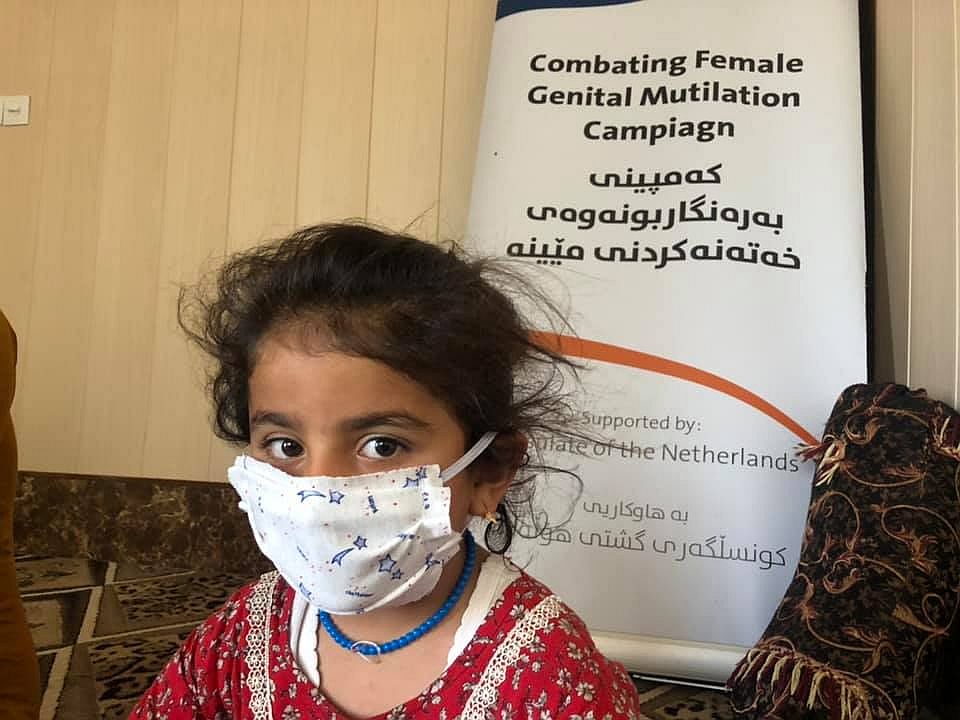
The experience of the organization in the provinces of Kurdistan Region extends for more than 15 years, during which it succeeded in ending the phenomenon of female circumcision in the areas of Halabja and Garmian.
The new campaign of Wadi in Iraq will start on February 6, 2022, which coincides with the International Day against Female Genital Mutilation FMG, and the doors of the campaign are wide open to any organization or party that wishes to support and participate in the campaign.
Thomas von der Osten-Sacken, Director General of Wadi, told KirkukNow, “The new campaign is to encourage people and society to reject FGM, through two main demands, one of which is a study by the organization and secondly their efforts be transferred to the Iraqi parliament to ban this practice by law.”
Wadi, which means valley in Arabic, Association for crisis Assistance and Development Cooperation, is supporting various projects to empower women and youth in the Middle East since 30 years.
Wadi was founded in the fall of 1991 by various organizations and individuals. The original idea was to found an umbrella organization that coordinates and bundles the activities of various groups and people active in Iraq and Kurdistan.
Its main projects covers rehabilitation for long-term prisoners, literacy programs, education and training for women, public awareness of and fight against domestic violence as well as campaigns against FGM

A previous study conducted by the United Nations UN in 2011 indicated that the rate of female circumcision in northern Kurdistan Region exceeds 44% compared to less than 1% in other Iraqi provinces in the middle and south.
Wadi criticizes this study and calls for a new study because it believes that the “real percentage of female circumcision” appeared in the Kurdistan Region as a result of Wadi’s efforts and continuous work on this issue, while the issue was not raised in the rest of Iraq and the real percentage of that practice remained a secret.
Doubting the numbers
Osten-Sacken told KirkukNow that because of the study conducted by the United Nations, the world has come to believe that female circumcision is practiced in the Kurdistan Region only and that this phenomenon is non-existent or rare in other parts of Iraq, “while things are not like this, the phenomenon of female circumcision is common in Baghdad, Babylon and other parts of Iraq.”
“If circumcision is common only among the Kurds, then why the big number of Kurds living in Baghdad don’t practice female circumcision, as UN study says that the percentage is very low there? So this problem has nothing to do with a particular ethnicity, but rather it is common in all parts of Iraq. ”

The director of the Wadi says that studies conducted by the organization in Dohuk province, whose residents are also Kurds, showed percentage of female circumcision is very low, but there is evidence and information that female circumcision is practiced in Baghdad, Kirkuk, Babil and Khanaqin.
Osten-Sacken hinted UN had earlier considered female genital mutilation a widespread phenomenon in Africa. “It took us seven years to be able to convince the United Nations that this phenomenon also exists in Iraq.”
In 2010, Wadi conducted an extensive study in the Kurdistan Region to find out the rate of female circumcision, which in some areas reached 70%. Two years later, the organization published the results of a study conducted in Kirkuk province.
According to the study conducted in Kirkuk, in which more than a thousand girls and women participated, it was found that the percentage of women and girls who were subjected to FGM reached 38%, the majority of them are Kurds, followed by Arabs and then Turkmens of both sects, Sunni and Shiite, but no cases of FGM were recorded among Christians.
The Northern oil-rich city of Kirkuk, located 238 kilometers north of Baghdad, is an ethnically mixed province for 1,7 million Kurds, Arabs, and Turkmens, Sunnis and Shiites, besides Christians and Kakais. It has long been at the center of disputes between Baghdad and the Erbil.
The results of the study and the information collected in other regions such as Baghdad and Babylon prove that the phenomenon exists in other Iraqi provinces for which Wadi is trying in cooperation with activists, organizations, government and parliament to confront the problem.

In 2005, WADI launched the “Stop Female Genital Mutilation” campaign in the Kurdistan Region and banning this phenomenon within the framework of the law is part of the achievements of that campaign.
According to the law to stop domestic violence, endorsed by the Kurdistan Parliament in 2011, female circumcision is a form of violence punishable by up to three years in prison and a fine of up to 10 million dinars.
Wadi launched Stop FMG campaign in Germian, suburbs south of Sulaymaniyah Northern province, and some other areas in 2004. In 2018, only 29 cases were recorded in the the Region.
Germian Region free of FGM now
As per Wadi figures, not a single case of FMG was recorded in Germain in 2019, however, 161 cases were recorded in Erbil and 162 in Ranya, northwest of Sulaymaniyah.
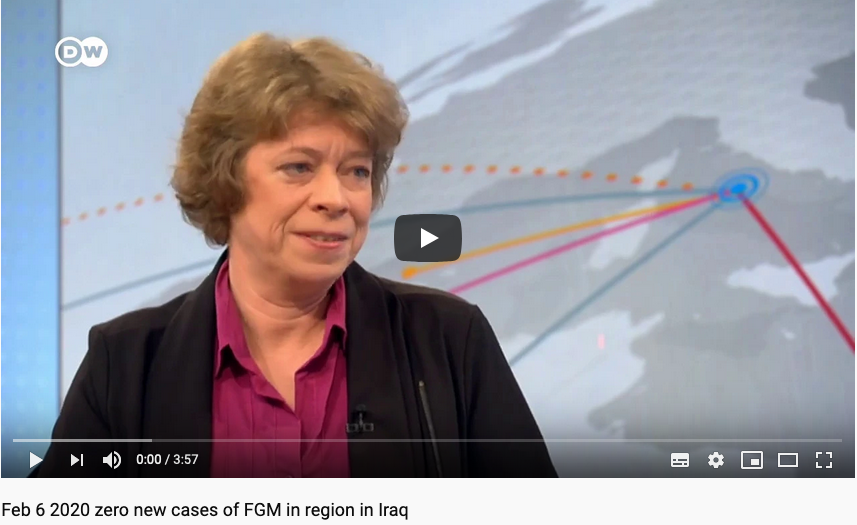
On February 6, 2020, Wadi organization in cooperation with Netherland Consulate arranged a conference on the International Day of Zero Tolerance for FMG in which they announced that Germian region free of FGM.
Chiman Rashid, Director of Wadi projects in Dohuk, believes, “Iraqi society needs preparation and proper ground in order to convince people of the necessity for rejecting female circumcision, for which there is need for discussion and debate with religious figures, families, NGOs and the government, get people confidence and awareness campaigns about the harmful effects of female circumcision.”
There is no law in Iraq that prohibits or encourages female circumcision.
“I have talked to civil society organizations, and they replied the practice is taking place on a large scale in Iraq, but secretly,” said Chiman, who believes that the time has come for FGM to be practically prohibited in other regions of Iraq, similar to the Kurdistan Region.
WADI adopts three strategies in combating FGM: spreading awareness, collecting data and working to eradicate the phenomenon in local communities.
Challenges ahead
Osten-Sacken says Wadi expects to face the same challenges it had faced in the Kurdistan Region during the transfer of that experience to other regions of Iraq, “but the difference is that we will not start from scratch. The Iraqi media is constantly working on preparing and publishing reports on the fight against female circumcision in the Kurdistan Region, therefore, the issue will not be new to people.”
He hopes their campaign will reach the Iraqi parliament in a short time, and that female genital mutilation will be banned by law, as happened in the Kurdistan Region, and the campaign organizers are looking to ensure that they receive the support of Kurdish representatives in Baghdad at the very least.
Osten-Sacken is not afraid of the influence of the religious backgrounds of the majority of parliamentarians on efforts to ban and criminalize female circumcision, given that the campaign is based on the Islamic Hanafi school of thought, which considers circumcision to be optional and not obligatory, unlike the Shafi’i school.

The Anti-Domestic Violence Law has been sitting on the shelves of the Iraqi parliament for years and has not been approved yet, but the law did not specify any paragraph to prohibit female circumcision, contrary to the law issued in the Kurdistan Region.
Wadi director believes banning the phenomenon of female circumcision by law will have a major role in putting an end to the phenomenon because “people will join the efforts against female circumcision on a larger scale once they know its practice will have legal consequences.
He pointed out that Parliament is the one which will decide whether to add a paragraph on the prohibition of female circumcision to the draft law to combat domestic violence, or to draft and endorse a separate law.
A study by UN in Iraq conducted 2018 indicates over 7% of girls are subjected to FGM and it plans to put an end to this phenomenon by 2030.
Rashid thinks working across Iraq exposes them to many challenges, “because it is the first time that an organization tries to raise an issue that has been kept secret in society for thousands of years, at a time when women not only are not allowed to talk about such sensitive issues, yet even about their social problems.”
“But we want to overcome all obstacles and challenges and implement the project,” she added.
In addition to the new campaign, Wadi projects will continue in the Kurdistan Region, the phenomenon of female circumcision has not been eradicated in many cities, while the second part of the organization’s projects focuses on girls and women who have been subjected to circumcision to help them overcome the post-trauma effects of that practice and restore a normal life.
Wadi has led awareness campaigns about Covid-19 from the early beginning of the outbreak of the pandemic through its staff in cooperation with medical staff and its media partners. KirkukNow media outlet is one of WADI’s partners.
More information about Wadi’s Campaign against FGM
Promising developments in Sudan & the United Arab Emirates
8.6.2020
Female genital mutilation is a global problem and one which requires global action to end it. Research on the existence and prevalence of the practice is critical to the efforts to eradicate the practice. Laws criminalizing FGM provide a cornerstone for national efforts to end the practice. We’ve rounded up significant developments in laws and available data to end FGM over the last few months.
New Research on Female Genital Mutilation in the United Arab Emirates (UAE)
Earlier, there was only a single study on the existence of FGM in the UAE – a small survey of 100 Emirati women from 2011, which demonstrated that 34% of the women surveyed had undergone FGM. Now, a new research study that surveyed 831 women in Abu Dhabi city has found an FGM prevalence rate of 41.4% amongst the study participants. The study found that the most common type of FGM performed in the UAE was Type 1 (partial or total removal of the clitoris and/or the clitoral hood). Significantly, around 72% of the respondents were against the practice of FGM, which bodes well for the future!
Read full article on Equality Now
New Awareness Brochures against FGM distributed in Kurdistan-Iran
20.05.2019 The distribution of the Educational Brochure as a Risk Minimization Activity to raise awareness about FGM complications among residents of Javanrud and Salas.
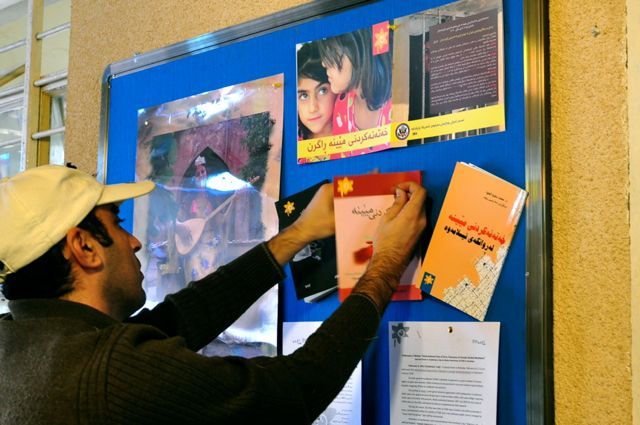
Educational brochures are an important tool for raise awareness about FGM and its complications among in risk people. It is important to evaluate the impact of any risk minimization tool to understand the effectiveness of the strategy.
The objective of this work was to distribute of a targeted educational brochure among residents cities of Javanrud and Salas (Kermanshah Province) as a risk minimization strategy for the stop FGM in these important regions of Iranian Kurdistan.
Dr. Osman Mahmoudi and his team at Hamraz Counseling Center held a prospective, non-interventional study designed to distribute a special brochure designed to provide important new information on female genital mutilation and its complications to a specific urban population consisting of citizens of Salas and Javanrood in Kermanshah province.
The statistical population in this educational project included all women and girls over 18 years of age in the target cities. During pre-marriage classes in 2018 more than 2000 girls and women over the age of 18 in 15 rural and urban areas of Javanrud and Salas were directly trained by 20 trainers about female genital mutilation and its complications. And more than 2000 leaflets on female genital mutilation and its complications in these 15 urban and rural neighborhoods were distributed by the 20 trainers.
It’s important we noted that all of 20 trainers received advanced training about female genital mutilation and complications by Dr. Osman Mahmoudi prior to training and distribution of brochures. Distribution of targeted educational brochures may be an effective risk minimization strategy to raise awareness about FGM and its complications in Kermanshah; Educational brochures may also be an effective channel for sharing information on how FGM should be best managed and ended. The Campaign of Hamraz Counseling Center is hosted by Dr. Osman Mahmoudi. Over the past ten years, the campaign has been active in research, education, and counseling in the cities of Kermanshah (That women are more likely to be circumcised) in the field of female genital mutilation. If they receive more support for running their programs to stop FGM, these important activities can spread to other cities and provinces of Iran.
Sahiyo: No, even ‘symbolic’ or ‘mild’ female genital cutting is NOT okay
2.7.2016. Should mild forms of Female Genital Cutting (FGC) be legalised? Should supposedly “harmless” nicking or slicing of clitoral tissue be medicalised, simply because getting communities to completely stop FGC happens to be a very difficult task?
There has always been some support for mild, medicalised FGC, chiefly from communities that claim to practice female “circumcision” and see it as completely different and divorced from any form of genital “mutilation”. And for years, this view has been firmly refuted by survivors and activists who don’t want any girl to experience the trauma, betrayal and potential harm that even the least severe forms of FGC can cause. (more…)
Sahiyo: Bohra Men Speak Out to Save Their Daughters from Female Genital Mutilation
27.6.2016. The fatwa given during the Zikra majlis by Syedna Mufaddal Saifuddin in favor of female genital cutting dug up the wound in my heart, which is also the reason I am writing this post.
Looking at parts from the audio clip leaked from the majlis, at one point, Syedna Mufaddal Saifuddin says what translates to English as:
“It must be done. If it is a man, it can be done openly and if it is a woman it must be discreet. But the act must be done. Do you understand what I am saying? Let people say what they want.”