Home » Posts tagged 'UNICEF'
Tag Archives: UNICEF
News by Others »
-

“The work to combat female genital mutilation begins with trust”
-
Female genital mutilation driven by local customs in southern Iran – study
-
New Report finds Female Genital Mutilation/ Cutting in 94 countries
-
Medicalized Female Genital Mutilation: Faulty Policies, Unwilling Doctors, and Frightened Girls
-
“I lost my baby in front of my eyes”, FGM adds to the tragedies facing Yemeni women
-
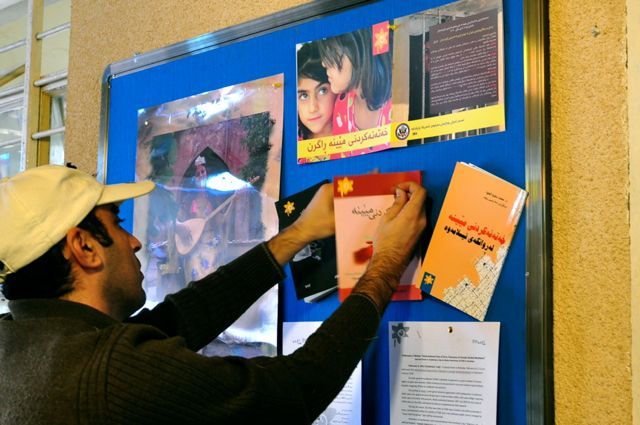
Countering Female Genital Mutilation (FGM) in Iraq
-
Promising developments in Sudan & the United Arab Emirates
Oman bans unexpectedly Female Genital Mutilation
30.9.2019. Two weeks ago, the Omani Ministry of Social Affairs und Development announced a change in the law protecting children. Now, the convention of the child includes a specific prohibition of female genital mutilation (FGM). This change in law came as a surprise to most observers.
FGM: Slow progress when talking to the UN about numbers
5.2.2016, by Stop FGM Middle East UNICEF just came out with new numbers on FGM. Instead of 140 million, the United Nations Children’s fund now estimates the number of women and girls having undergone female genital mutilation worldwide to be at least 200 million. Those extra 60 million come from adding Indonesia to the list […]
Day of Zero Tolerance to FGM: We need more campaigns in Asia
By Stop FGM Middle East February 5th, 2015. On the fifth official International Day of Zero Tolerance to female genital mutilation (FGM), the campaign against FGM in Iraq is taking up speed and with its comprehensive approach already yielding great successes. Newest data shows: FGM can be eradicated in one generation. According to a KAP-Study […]
Video-Clip: At the mosque
By Stop FGM Middle East. 4.2.2015. Religious beliefs play an important role in the battle against Female genital mutilation (FGM). Clerics are part of the large-scale campaign against FGM in Iraqi Kurdistan. In this video-clip an Imam explains why FGM is not in accordance with Islam. It is one of four vidoe-clips shown regularly on […]
Video-Clip: At the doctor’s office
By Stop FGM Middle East. 4.2.2015. In the Iraqi Kurdish region a law against FGM is in place and all TV and radio-channels are airing information about FGM. This is part of a large-scale campaign against Female Genital Mutilation which is run by WADI and Unicef. Politicians, doctors, clerics, policemen and the media are supporting […]
Video-Clip against FGM: Mobile teams stop the practice
By Stop FGM Middle East. 4.2.2015. In this video-clip one of WADI and Unicef’s mobile teams arrives at a remote village. These mobile teams visit the Kurdish villages regularly educating about FGM and the law against domestic violence, but also discussing daily issues and needs of the population trying to find solutions. In the Iraqi […]
Yearly Report 2013-14
11.1.2015 by Stop FGM Middle East Stop FGM Middle East was founded as a website and a small research project in early 2013 with the aim of making the existence of FGM in the Middle East and Asia outside of Africa public. In August 2013 we started working with a small team to bring together […]
Iraq Business-News: First-Ever Survey of FGM in Northern Iraq
9.9.2014. The Kurdistan Regional Government (KRG) High Council of Women’s Affairs (HCWA) together with UNICEF, Heartland Alliance International, and Wadi, and in collaboration with UN Women and UNFPA, released this week results of a first-ever ‘knowledge, attitudes and practices’ (KAP) survey on the root causes of female genital mutilation (FGM) in the Kurdistan Region of […]
PREVALENCE OF AND SUPPORT FOR FEMALE GENITAL MUTILATION WITHIN THE COPTS OF EGYPT: UNICEF REPORT (2013)
12.3.2014. Discorus Boles on Coptic Nationalism. In a previous article, I surveyed Egypt’s statistics in respect of the prevalence of and support for female genital mutilation (FGM) as revealed in the UNICEF’s document, published in July 2013, Female Genital Mutilation/Cutting: A statistical overview and exploration of the dynamics of change. The figures given are concerned […]
Stop FGM in Kurdistan: An Interview with the Activists
Honor Diaries, 5.3.2014. By Heidi Basch-Harod Communicating from Suleymaniah in Iraqi Kurdistan, STOP FGM Kurdistan Co-founders Thomas von der Osten-Sacken and Falah Murad Khan unpack the multi-layered efforts contributing to the ongoing campaign to win political, social, and civil rights for women.
Donation
Last Press Statements »
-
Putting the spotlight back on FGM in the Middle East – Wadi at the Women Deliver Conference 2026
-
FGM in Iraq: More research needed after succesful campaign in Kurdistan led to ban of harmful practice
-
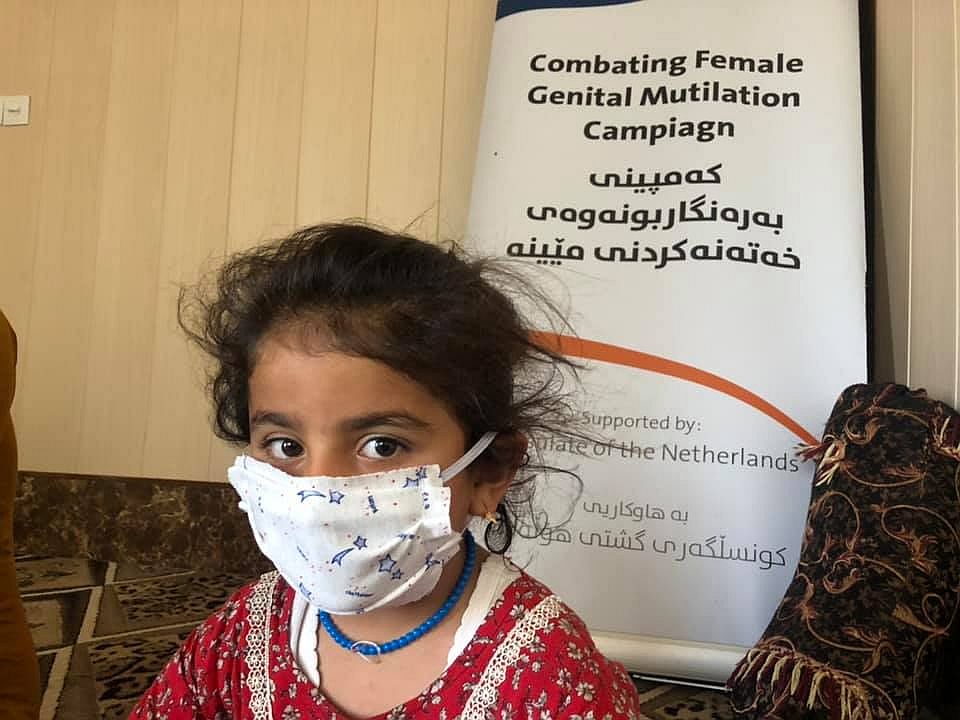
Conference on 6th of Feb: Long-term approach to eradicate FGM in Iraqi Kurdistan yields results
-
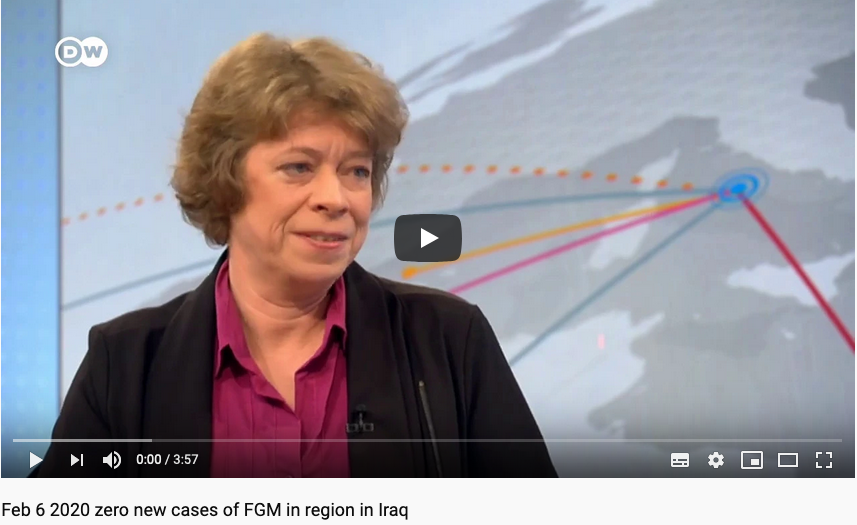
Feb 6: Wadi speaks on DW about what made success in Kurdistan possible
-
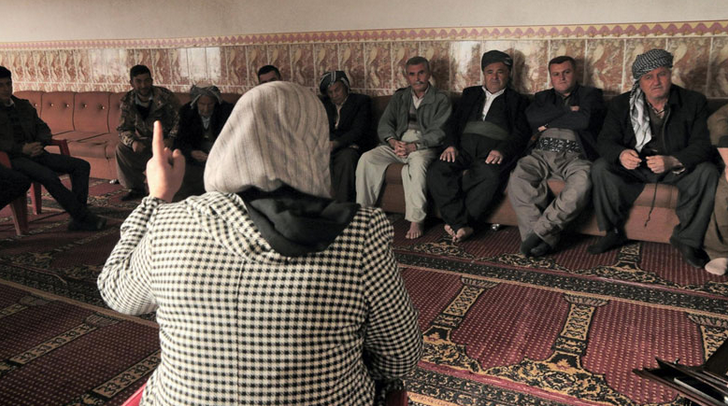
6th of Feb: WADI announces FGM has dropped to zero in highly effected region in Iraqi Kurdistan
-

Oman bans unexpectedly Female Genital Mutilation
-
Study finds: FGM is practiced by Saudi women