Home » News by Others (Page 12)
News by Others
Not just a pinch of skin
18.8.2013. A film student made a film about the practice of FGM in the Bohra community in India. First it was seen with suspicion, now she won a national award.
Interview of the director by Yollande D’Mello (dna)
It started out as a college project that Priya Goswami, an alumna of National Institute of Design, Ahmedabad, worked on in her final year. In March, the 25-minute documentary, A Pinch of Skin, about Female Genital Mutilation (FGM) in India, won the National Film Award in the Special Mention category. dna caught up with her for a chat
Why did you choose this topic?
I stumbled upon an article that broached the topic and knew immediately that this would be the subject of my documentary. I had never heard about the practice of Female Genital Mutilation from friends belonging to the Dawoodi Bohra community or otherwise, and wondered why that was. I want to start a conversation. I’m a feminist at heart but I wanted to make an objective film.
How did you convince people to come on record?
I shot in Mumbai, Delhi, Ahmedabad, Surat and Udaipur where people were either on board or not. We worked around their requests to use silhouettes, not shoot faces or simply record audio. I took whatever they gave me.
How does the film manage to capture emotions without any faces?
Everyone we spoke to had a vociferous opinion to be expressed. We let their body language do the talking. So gesticulating hands and tensed toes make up for facial expressions.
How did the practice of FGM begin?
It’s a myth. There is actually no mention of it in the Quran. Since the community was predominantly merchants, men travelled a lot. Removing the haraam ki boti, as it is called, was a way to control the sexual urges of women and keep them from infidelity. Read More.
U.N. pressures Indonesia to stop health workers performing FGM
LONDON (Thomson Reuters Foundation) 12.8.2013. Indonesia should stop allowing doctors, midwives and other health workers to carry out female genital mutilation (FGM) on children and babies as young as six months, the United Nations Human Rights Committee (OHCHR) has said.
The committee also urged the country to pass legislation banning any form of FGM and to put in place penalties that reflect the “gravity of this offence”, which campaigners say is a serious human rights violation. OHCHR made its comments on Friday in observations on the state of the International Covenant on Civil and Political Rights.
The “medicalisation” of FGM – a term used for when the practice is performed by health practitioners – has emerged as a trend in several countries and campaigners say it is setting back global efforts to eradicate the ancient ritual. It is also seen as one of the biggest risk factors as it is often seen as legitimising FGM. Read more
FGM Debate Continues in Muslim Lands
Gatestone Institute 18.07.2013, by Irfan Al-Alawi
While overshadowed apparently by the general civil conflict over the Muslim Brotherhood (MB) regime in Egypt, the spreading problem of female genital mutilation (FGM) has recently shaken the land of the Nile.
Yet the mass upsurge against the tyrannical fundamentalism of the MB is related, however obscurely, to the protests against FGM.
Late in June, British media reported that Suhair Al-Ba’ta, an Egyptian girl aged 13, died during an FGM “operation.” She reportedly perished from blood loss while subjected to FGM in a village north of Cairo. The latest terrible “death by FGM” of a girl in early adolescence provoked widespread outrage at the practice. Disregarding public opinion, representatives of the Muslim Brotherhood, according to the British Broadcasting Corporation (BBC), defended FGM as “Islamic.”
FGM has been illegal in Egypt since 2007, after the death in an anesthesia overdose during the mutilation of a 12-year-old girl, Budour Ahmad Shaker. The Egyptian government previously attempted to suppress FGM in 1996, and to reinforce the injunction against it in 1997. Egyptian officials affirmed in 1997 that FGM was not justified by Islam, and were supported in condemning it by scholars from the Al-Azhar Supreme Council of Islamic Research, based in Al-Azhar, the preeminent university in Sunni Islam. The Al-Azhar authorities stated that cutting female sexual organs — even partially– has no foundation in Islam, is medically harmful, and should not be carried out.
Dr. Naglaa El-Adly, research director for Egypt’s National Council for Women, has argued that the Muslim Brotherhood used its influence to prevent enforcement of the laws against FGM. Dr. El-Adly, like other experts, asserts that FGM is an ancient pagan custom in the region, with no basis in Islam. She noted the existence of the problem among Egyptian Christians, and has called on media and religious leaders “to tell people it is not related to Islam or Christianity.”
FGM slowing down? The UN asserts it, the Indonesian case contradicts it
15.6.2013. Mirielle Valette explains in the French feminist magazine Sisyphe why the United Nations figures about female genital mutilations are too low. Giving details about evidence from several Asian countries, she questions why the UN does not update their assumptions about FGM.
by Mireille Vallette
The UN communication with regard to sexual mutilations is deceitful. It underestimates the number of excised girls, ignores the reality of excisors countries such as Indonesia, and maintains strict taboo of the religions role. Without it, reality would appear naked : some 300 mio Muslims are concerned by excision and without an active intervention of religious leaders, the scourge will not disappear.
Investigation and call for a mobilization !
Unicef provides annually the status about the situation of female genital mutilation.1) It is estimated that some 130 million women worldwide have endured it and that three million girls are subject annually to the circumciser’s knife or to any other kind of mutilation. Figures are far below reality.
Unicef also announced that these mutilations are decreasing everywhere. It is also false : in some countries, the scourge increases. The agency also asserts that in 25 years, mutilations will have disappeared. A dream…
The implicit assumption of these statistics is that excising countries are known and identified. Howewer, only Africa (and Yemen) fall into this accounting. Does only Africa excise ? No, but to collect representative data and integrate them, Unicef needs the approval of the governments.
What happens in the Middle East and Southeast Asia ? About the first, we do not know much and the second contradicts the findings of Unicef. In Indonesia and Malaysia, the feminine genital mutilations (FGM) are common, and rising. Moreover, they contribute to the increasing medicalization denounced by the WHO in other countries.
Egyptian girl dies undergoing circumcision
“We left our daughter with the doctor and the nurse. 15 minutes later, the nurse took my daughter out of the operation room to a nearby room, along with three other girls whom the doctor was circumcising,” Mohammed Ibrahim, a farmer, told Egyptian daily al-Masry al-Youm.
“I waited half an hour, hoping that my daughter would wake up, but, unfortunately, unlike the rest of the girls, she did not,” he said.
See also: Now: Female genital mutilation in Egypt – The tragedy of Suhair al-Bateh reopens the question of female circumcision
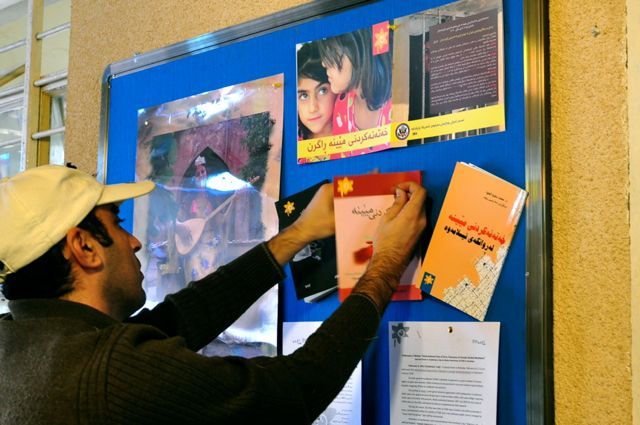
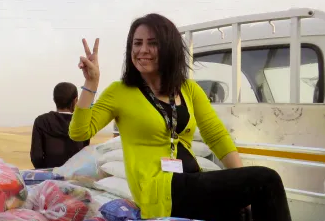
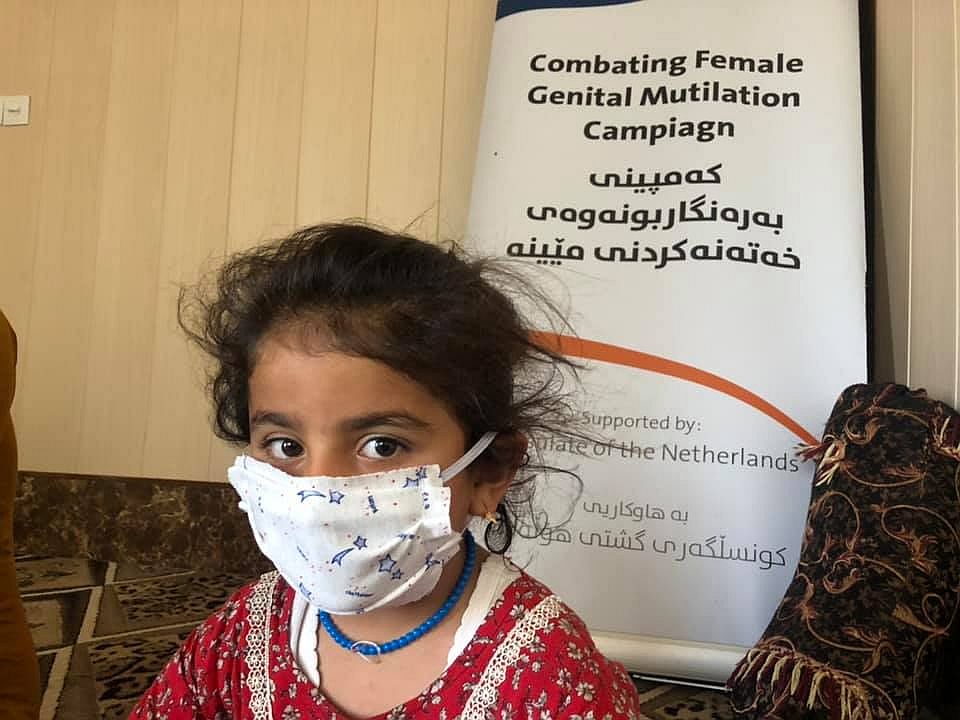
Fighting against Female Genital Mutilation in Iraq
31.7.2013. The British Independent interviewed the vice-president of the Pana Center in Kirkuk, Iraq – a partner organization of Wadi. The women’s rights campaigner Awezan Muri talks about her own experiences in her family and the challenges she encounters fighting FGM in Iraq. Figures from the Pana Centre show that 38 per cent of women in Kirkuk are victims.
As a nine-year-old growing up in the Iraqi city of Kirkuk, Awezan Nuri narrowly escaped female genital mutilation. “My mother was 12 when she was mutilated,” says the 31-year-old women’s rights campaigner, who is also a renowned poet. “She has told me about the terrible pain, how much she bled that night and how ashamed she was to tell her family she was hurting. She couldn’t talk to her mother, because her mother was the one who’d taken her to be cut. She felt alone and scared.”
Despite the trauma of that experience, Nuri’s mother still pushed for her six daughters to undergo the same process themselves. “She thought it was the responsibility of every Sunni Muslim to do this. Logically, she disagreed with it, but there was so much pressure from society.”
It is a misguided belief among Muslim communities in dozens of countries around the world that the practice is mandated in Islam. For Nuri, it was an intervention by her father that saved her sisters from the knife – he said he did not agree with it. But most Iraqi Kurds are not so lucky. Figures from the Pana Centre – of which Nuri is vice president, in charge of the campaign against female genital mutilation (FGM) – show that 38 per cent of women in Kirkuk are victims. Among ethnic Kurds, that figure rises to 65 per cent.
“I protect women’s honour”
Kirkuk Now 4.5.2013.
Pura Gullstan is well known outside of Kirkuk city due to her profession, as she performs female genital mutilation and according to her statement, she has so many stories about FGM to tell but she does not want to let people know about them.
Photo: Hawlati
Female genital mutilation is a stain on reputation of the Kurds in their treatment of women. There are very few women agreeing with FGM, and Gullstan claims herself to be the saviour of the women when she talks about her profession. If there are not numerous clients, how has Pura Gullstan managed to continue what she has been doing for so long?
Female Genital Mutilation Still Widespread in Egypt
CAIRO — Egyptian activists are concerned that the rise of Islamist politicians could undermine years of work to discourage female genital mutilation. The practice, and the movement against it, however, have far deeper roots in the country.
To its supporters, it is a sign of purity, community and religious devotion. To its opponents, it marks the physical manifestation of a woman’s degradation. Read more
Moves to medicalize female mutilation could destroy ‘Stop FGM’ advocacy
WNN SOAPBOX 17.4.2013
By Faiza Jama Mohamed
(WNN) Nairobi, KENYA: Female genital mutilation (FGM) is a severe form of discrimination against girls. It is an extremely violent act of control and an utterly invasive and destructive assault of the female sexual organs. It promotes the idea that there is something fundamentally wrong with girls, which needs to be changed. It is often carried out for cultural or supposedly religious reasons, even though it is not referred to in any major religious text. FGM is most prevalent in parts of Africa and the Middle East. However, it is a global problem, which has already affected 100 – 140 million women and girls around the world.
One of the most worrying recent developments relating to FGM is the shift towards permitting it to be performed by medical professionals in a supposedly ‘safe’ environment. We have recently been calling for urgent action in Indonesia, one of the first countries in the world to attempt to ‘legitimize’ FGM in this way. As Indonesian girls are usually less than six weeks old when this is carried out, they have absolutely no say in this decision, which transforms their entire future. We are also concerned about recent development in Malaysia, which could see something similar happening there. The Malay Minister for Health is keen to formalize and legitimize the ‘medicalization’ of FGM, despite the fact that there is absolutely no benefit or necessity to do so. This ignores both UN and WHO guidelines, which recognize it as a severe form of violence and child abuse against girls. Read more.
Times of India: NID student’s film on female genital mutilation
30.3.2013. What is it like to have undergone female genital mutilation, asks NID student’s film
When a 24-year-old student of film and video communication at the National Institute of Design (NID) in Ahmedabad received a special mention at the 60th National Film Awards, it was for showing nerve. Although devoid of sting operations and hidden cameras, Priya Goswami’s 27-minute documentary goes where no one has. In A Pinch of Skin, the young filmmaker gets a string of women to openly share the horror of female genital mutilation (FGM), a practice so secretive, often brothers aren’t aware their sisters have undergone it. The one-million strong community of Dawoodi Bohras, a sect of Ismaili Shias concentrated in trade-focused centres of Maharashtra and Gujarat, carry out the practice citing ‘faith’ as reason, although Islamic scholars say Islam doesn’t sanction it. Original article
More background on the film on kracktivist and DW Blog Women talk Online.
The film on Facebook