
Home » Articles posted by hannahcaroline36 (Page 14)
Author Archives: hannahcaroline36
New petition against FGM in Indonesia
5.4.2014. On Force Change, a plattform for petitions, a new petition was posted asking the Un secretary general Ban Ki-Moon to stop female genital mutilation in Indonesia. You can sign the petition here.
Submission to the UN: Medicalization of FGM in Indonesia
31.3.2014. Terre des Femmes and Watch Indonesia!have send an additional submission to the United Nations Comitee on the Rights of the Child, 66th Session, in which they call for a ban on female genital mutilation in Indonesia.
In their statement they describe how medicalization leads to an increase of FGM: “Many hospitals offer FGM as part of “birth packages” including health checks, ear piercing and vaccinations. Ironically, this practice would not be considered as a human rights violation since it has a legal basis. The promotion of ‘healthy’ FGM in Indonesia has become so popular that even girls from the greater Pacific region are at risk of being cut in Indonesia.”
read full statement

Ahmadiyya: Not in Islam’s Name
28.3.2014. The Ahmadiyya community is joining the struggle against female genital mutilation (FGM). Already on March 7th the Ahmadiyya Times published a fierce condemnation of FGM by Qasim Rashid calling FGM and act of terrorism. Now Farooq Aftab, a spokesperson for the Ahmadiyya Muslim Youth writes on Your Middle East: “Not in Islam’s name, not in my name.”
Farooq Aftab‘s article:
“80% of the Muslim world do not practice FGM”
MALDIVES: Cleric calls for FGM on Islamic grounds
Lapidomedia 12th March 2014. By Vishal Arora
CUTTING OFF a piece of a young girl’s flesh might at last be getting the recognition it deserves in the West as a human rights violation, but in the Maldives it is making a return as a ‘religious obligation’.
A fatwa has been issued by an influential Islamic scholar here, citing specific hadith or sayings of the Prophet Mohammed.
FGM is one of the five things that are part of fitrah, or nature, says the fatwa by Dr. Mohamed Iyaz Abdul Latheef, Vice President of the Fiqh Academy of the Maldives, posted on www.mvislamqa.com, a website which seeks to ‘convey the true message of Islam.’ Full artcile on Lapidomedia
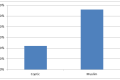
PREVALENCE OF AND SUPPORT FOR FEMALE GENITAL MUTILATION WITHIN THE COPTS OF EGYPT: UNICEF REPORT (2013)
12.3.2014. Discorus Boles on Coptic Nationalism.
In a previous article, I surveyed Egypt’s statistics in respect of the prevalence of and support for female genital mutilation (FGM) as revealed in the UNICEF’s document, published in July 2013, Female Genital Mutilation/Cutting: A statistical overview and exploration of the dynamics of change. The figures given are concerned with Egypt as a whole, and so when the percentage of 91% is given as prevalence of FGM in Egyptian girls and women in reproductive age, that is between 15 and 49 years, it does not differentiate between Muslim and Christian Egyptian girls and women. Now, I am going to try to find the statistics relevant to the Coptic Christians. (more…)

Stop FGM in Kurdistan: An Interview with the Activists
Communicating from Suleymaniah in Iraqi Kurdistan, STOP FGM Kurdistan Co-founders Thomas von der Osten-Sacken and Falah Murad Khan unpack the multi-layered efforts contributing to the ongoing campaign to win political, social, and civil rights for women. (more…)

Female Genital Mutilation in Iran: Prohibited but not persecuted
4.3.2014. The gender researcher Rayeheh Mozafarian has tackled the issue of female genital mutilation (FGM) in Iran in a new scientific study. Sie demands an open discussion about the problem to stop the practice.
Rayeyeh Mozafarian who is working at the University of Schiraz conducted interviews about FGM in several Iranian provinces between 2007 and 2009. Yet, only recently was she permitted to publish her study after waiting for five years. According to her research 70 percent of female circumcisions are taking place in the provinces Kurdistan, West Aserbaidschan, Kermanshah, Ilam, Lorestan and Hormozgan. The practice can be found among both Shia and Sunni Muslims. (more…)
Open Democracy: Embracing shame: turning honour on its head
14 February 2014. The challenge that embracing shame poses to the longstanding perversion of honour, is the struggle for women’s human rights – the realisation of which will result in the entire community’s advancement and healing.
The social construct and custom of honour maintains order for many societies in the middle east and Africa, south and central Asia, and the worldwide diaspora of these diverse communities. A woman, the physical manifestation of honour, embodies this involuntary burden through her every day actions and decisions – or lack thereof – from the moment she takes her first breath until the day she dies. (more…)
Far East clinics offer genital mutilation to UK girls BBC News
16.2.2014. A British reporter calls up clinics in Singapore asking if she can have her daughter mutilated there. Yes, she can, for 35$. Another reason why our struggle in Asia is so important: Parents may perceive the “service” in Singapore as clean and professional and not understand that this is ruining their daughters life just as well.
httpv://youtu.be/x2xIkl-R884
Cleric supports Battle against Female Genital Mutilation in Iraqi Kurdistan
February 10, 2014
SULÊMANÎ, Kurdistan region ‘Iraq’,— For many years, people have believed that practicing of female genital mutilation (FGM) is required by Islamic religion, and that is why the majority of people, especially in towns and villages in KRG provinces, adhere to the practice.
However, a well-known Kurdish Islamic scholar recently issued a Fatwa “a ruling on a point of Islamic law given by a recognized authority” against the practice. Mustafa Zalmi says that not only does FGM have nothing to do with Islam, but, “Practicing FGM is taboo.” According to a report by the Gatestone Institute, Zalmi, “ He argued that as FGM is absent from Mecca and Medina, where the Islamic revelation was received and the early Muslim community was organized, there is no justification for its existence either there or in remote places such as Iraqi Kurdistan.”
(more…)