Regional Prevalence and Trends
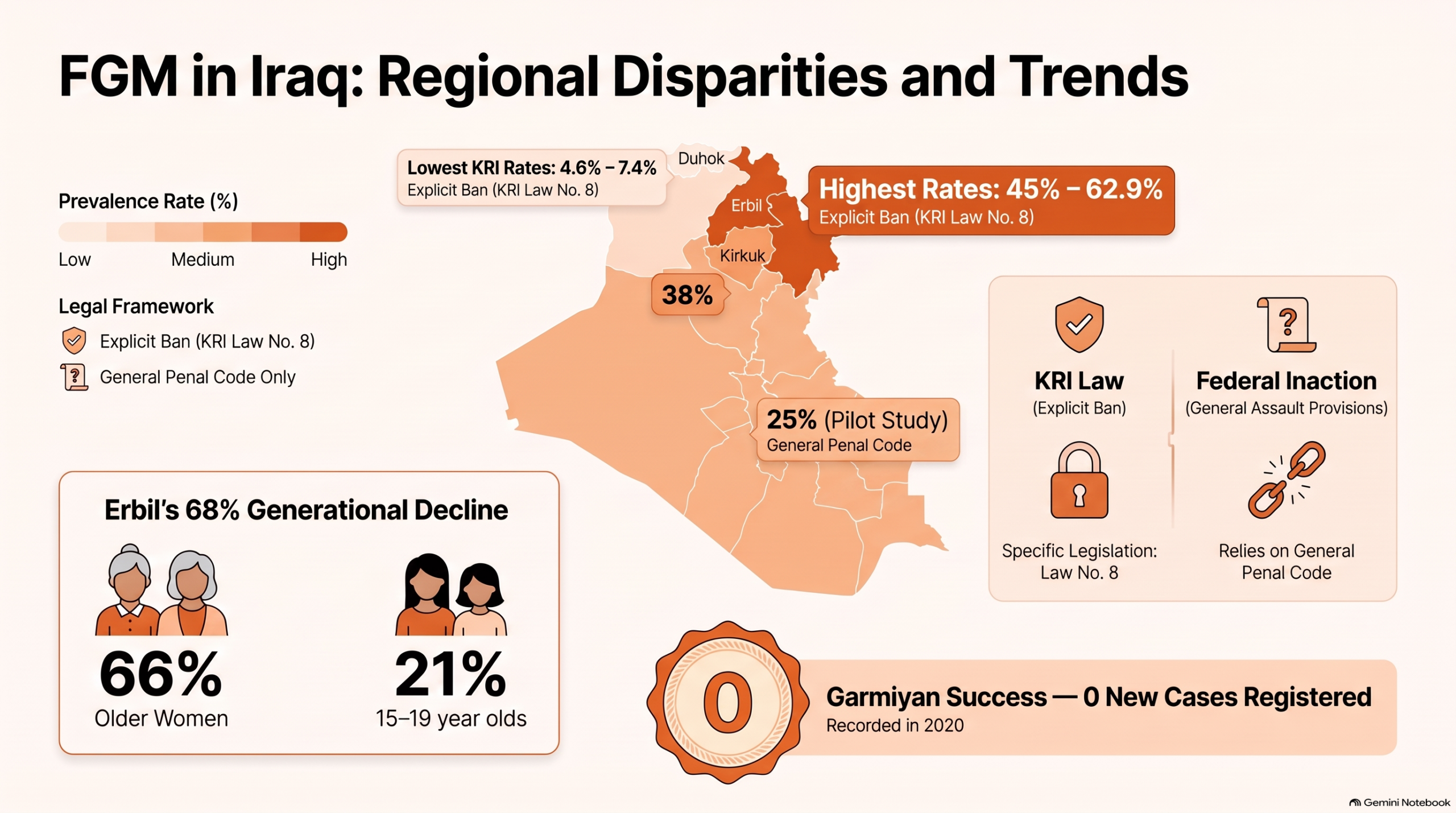
Empirical research and national surveys conducted over the past two decades reveal that Female Genital Mutilation (FGM) is practiced in Iraq primarily but not only in the northern governorates of the Kurdistan Region of Iraq (KRI). Prevalence rates vary significantly across the KRI: the highest rates are recorded in the Erbil (ranging between 50% and 62.9%) and Sulaymaniyah governorates (45% to 54%), while the Duhok governorate exhibits a substantially lower prevalence rate (4.6% to 7.4%). In the province of Kirkuk, not part of the KRI, but with a predominantly Kurdish population 38% prevalence was found.
In central and southern Iraq, initial national statistics like the 2011 UNICEF Multiple Indicator Cluster Survey (MICS) suggested the practice was non-existent outside the KRI and Kirkuk. However, small-scale pilot research conducted in 2014 across central and southern provinces (such as Babel, Wasit, and Qadisiyah) revealed that approximately 25% of sampled women and girls had undergone FGM, highlighting the need for broader national investigations.
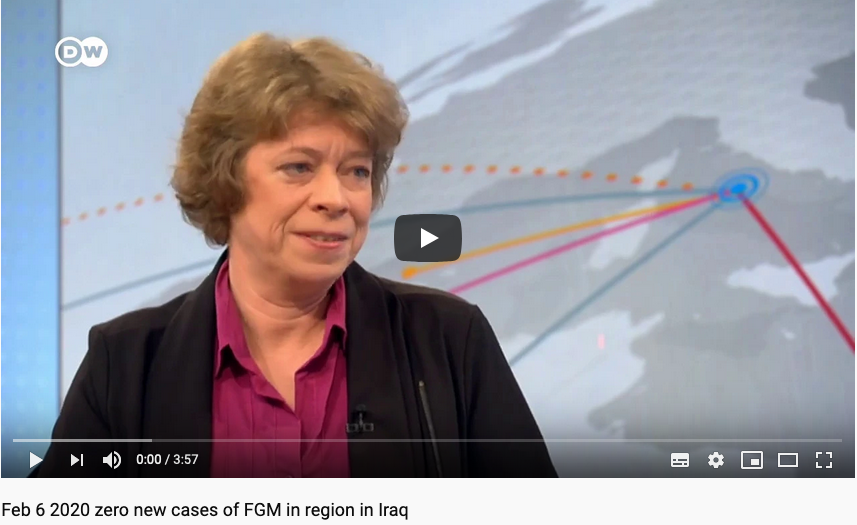
Epidemiological and cross-sectional studies demonstrate that FGM prevalence is significantly higher in rural regions, among women with lower educational attainment, and within lower-income households. Crucially, longitudinal survey data indicates a marked generational decline in the practice across Iraq. Older cohorts of women (aged 35–49) display substantially higher cutting rates compared to younger women and girls aged 0–14 or 15–19. In Erbil governorate, for example, cutting among girls aged 15–19 dropped to 21%, compared to 66% among women aged 40–49. In the Garmiyan administration, an intensive 15-year public awareness campaign culminated in a historic milestone in February 2020, when local rights groups recorded zero new cases of FGM among young girls over the preceding year.
The physical procedures performed in Iraq are overwhelmingly categorized under WHO Type I (clitoridectomy), involving the partial or total removal of the clitoral glans and/or prepuce, locally referred to as Sunnat or Sunna excision. Type II (excision) accounts for a smaller fraction of cases, whereas Type III (infibulation) is extremely rare. The majority of girls undergo the procedure during childhood, predominantly between the ages of 4 and 10.
Chastity and Religion as Key Drivers
In local Kurdish and Arabic terminology, FGM is referred to as khatana, khafedh (meaning ‘to reduce’ or ‘to lessen’), or Sunnat. Deeply rooted social norms, cultural traditions, and concepts of family honor serve as primary justifications for maintaining the practice.
At the core of the social continuation of FGM is the control of female sexuality; the procedure is widely believed to diminish a girl’s sexual desire, thereby protecting her virginity before marriage, ensuring marital fidelity, and preserving family honor. In traditional communities, uncircumcised girls face severe social stigma and are frequently deemed unmarriageable. Religious misconceptions also strongly reinforce the practice. A significant portion of community members and local religious leaders perceive FGM as an obligatory Islamic requirement or a recommended Sunnah. Furthermore, notions of ritual purity play a decisive role: in various rural localities, an uncircumcised woman is viewed as having “haram hands” (unclean), leading to the cultural belief that food prepared by her is religiously impermissible to consume. Decisions regarding whether a girl is cut are almost exclusively made within the family domain by mothers, grandmothers, and elder female relatives.
Threat of Medicalization
FGM in Iraq has historically been carried out by traditional birth attendants, traditional midwives, or elderly female village practitioners (often referred to as Daya). These practitioners generally operate in domestic environments without formal medical training, utilizing non-sterile blades or knives without local anesthesia or antibiotics.
A growing concern in the Kurdistan Region is the emerging trend of medicalization. Studies analyzing MICS datasets found an increase in FGM procedures performed by trained health personnel (doctors, nurses, midwives), particularly among wealthier households. This shift is often driven by parents seeking to minimize acute physical suffering or bleeding under a mistaken harm-reduction mindset, facilitated by a rapidly expanding private healthcare sector. An increase in prevalence in wealthier classes in a 2019 study underlines the prediction that medicalization may make FGM acceptable again in groups where it was already abandoned. Qualitative assessments among healthcare workers in the KRI reveal that while formal medical professionals generally do not support the practice, baseline knowledge regarding legal prohibitions and clinical classifications remains limited.
Model law in Kurdistan, no legislation in central Iraq
The legal framework governing FGM in Iraq is bifurcated between the Kurdistan Region and federal Iraq:
- Kurdistan Region of Iraq: FGM is explicitly banned under the Act of Combating Domestic Violence (Law No. 8 of 2011). Article 2 explicitly classifies female genital mutilation as an illegal act of domestic violence. Under Article 6, penalties for performing, inciting, or assisting with FGM range from prison terms of 6 months to 3 years and fines between 1 million and 10 million Iraqi Dinars (approx. $765 to $7,650 USD), with aggravated penalties for medical professionals and offenses committed against minors. However, civil society and human rights organizations highlight severe implementation gaps. Almost no formal court prosecutions have occurred.
- Federal Iraq (Central & Southern Governorates): The central parliament in Baghdad has not enacted specific legislation prohibiting FGM. In federal courts, prosecutors must rely on general provisions of the Iraqi Penal Code (Law No. 111 of 1969), such as Article 383 (child endangerment) or Articles 410–416 (assault causing permanent disability or bodily injury). Additionally, Article 10 of the Iraqi Penal Code provides extraterritorial jurisdiction, allowing prosecution of Iraqi citizens who commit or conspire to commit crimes like FGM abroad.
Civil Society: Continuous Holistic Campaign yields results
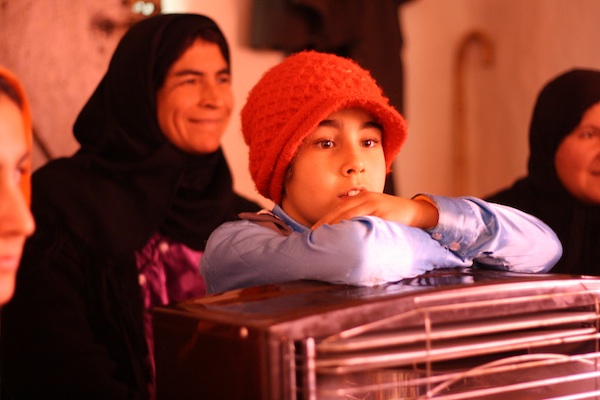
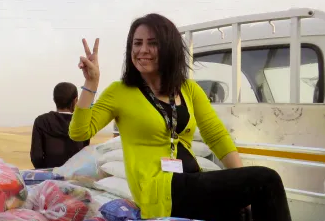
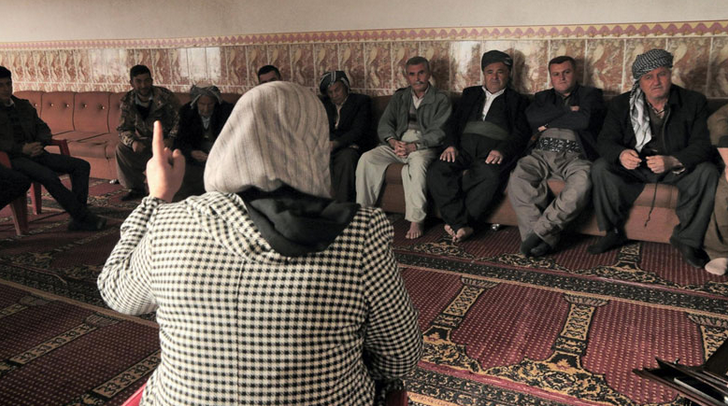
Civil society efforts to eliminate FGM in Iraq were pioneered by the German-Iraqi NGO WADI e.V.. In 2004, WADI mobile teams conducting field assessments in rural Garmiyan uncovered widespread cutting, challenging the prevailing international assumption that FGM was strictly an African phenomenon.
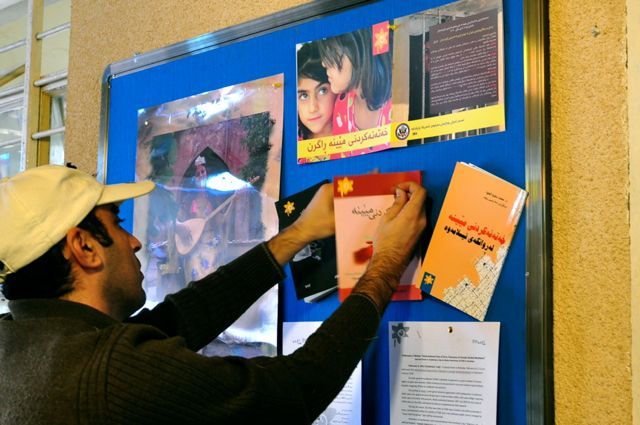
WADI initiated grassroots advocacy campaigns involving mobile educational units, local radio/TV broadcasts, and the documentary film A Handful of Ash. In 2006, WADI hosted the first national conference against FGM in Erbil and presented a petition signed by over 14,000 citizens to the KRG parliament, which was instrumental in securing the passage of Law No. 8 in 2011.
To sustain behavioral change, WADI developed the “FGM-Free Villages” initiative, enabling rural communities to publicly commit to ending FGM in exchange for community support projects. To address long-term health consequences, WADI launched the “Living with FGM” program, offering gynecological, psychological, and sexual counseling to affected women while engaging men in constructive dialogue. Wadi also lobbied religious leaders to condemn FGM, which some of them have done. Already in 2010, the High Committee for Issuing Fatwas issued a fatwa stating that FGM/C is not prescribed in Islam and that the practice predates Islam. This is remarkable in the respect that Iraq’s Kurdish Sunnis adhere to the Shafi’i law school which generally prescribes female circumcision as obligatory.
Through these multi-pronged strategies, WADI announced in February 2020 that FGM had been successfully eliminated in the Garmiyan administration. In 2013, WADI established the “Stop FGM Middle East & Asia” campaign to document FGM across the region, and continues to host inter-regional conferences uniting NGOs from Baghdad, Basra, Kirkuk, and KRI to advocate for a comprehensive federal ban across all Iraqi governorates.
References
WADI e.V. (2023). Conference to end FGM in Iraq.
Abdulah, D. M., Sedo, B. A., & Dawson, A. (2019). Female Genital Mutilation in Rural Regions of Iraqi Kurdistan: A Cross-Sectional Study. Public Health Reports, 134(5), 514–521.
Abdulrahman, S. S., & Ismail, K. H. (2023). Prevalence and Factors Associated with Female Genital Mutilation in Erbil, Iraq. Bahrain Medical Bulletin, 45(3), 1611–1615.
Ahmed, H. M., Shabu, S. A., & Shabila, N. P. (2019). A qualitative assessment of women’s perspectives and experience of female genital mutilation in Iraqi Kurdistan Region. BMC Women’s Health, 19(1), 66.
Orchid Project & WADI. (2026). The Law and FGM/C: Kurdistan Region of Iraq.
Shabila, N. P., Ahmed, H. M., & Safari, K. (2017). Knowledge, attitude, and experience of health professionals of female genital mutilation (FGM): A qualitative study in Iraqi Kurdistan Region. Health Care for Women International, 38(11), 1202–1218.
UNICEF. (2018). Statistical Profile on Female Genital Mutilation: Iraq. UNICEF Data and Analytics Section.
WADI e.V. (2020). FGM eliminated in Kurdistan’s Garmiyan region. Kurdistan24.
FGM-Free Community Programm, Wadi
“We need a great revolution for women”- account from an anti-FGM mobile teamer, Stop FGM Middle East, 22.5.2015
Visit to a Mullah who promoted FGM, Stop FGM Middle East, 20.5.2015
Rozhgar A. Saleem, Nasih Othman, Fattah H. Fattah, Luma Hazim & Berivan Adnan: Female genital mutilation among Iraqi Kurdish women: a cross-sectional study from Erbil city, August 2013
Berivan A. Yasin, Namir G. Al-Tawil, Nazar P. Shabila and Tariq S. Al-Hadithi: Female genital mutilation among Iraqi Kurdish women: a cross-sectional study from Erbil city, September 2013
Stop FGM, Wadi, 19.2.2013
Female Genital Mutilation in Iraq – an empirical study in Kirkuk province, 2012
Female Genital Mutilation in Iraqi-Kurdistan – an empirical study by Wadi, 2010