Home » Articles posted by Hannah Wettig (Page 2)
Author Archives: Hannah Wettig
News by Others »
-
New study reveals FGM practiced in Kerala, India
-

“The work to combat female genital mutilation begins with trust”
-
Female genital mutilation driven by local customs in southern Iran – study
-
New Report finds Female Genital Mutilation/ Cutting in 94 countries
-
Medicalized Female Genital Mutilation: Faulty Policies, Unwilling Doctors, and Frightened Girls
-
“I lost my baby in front of my eyes”, FGM adds to the tragedies facing Yemeni women
-
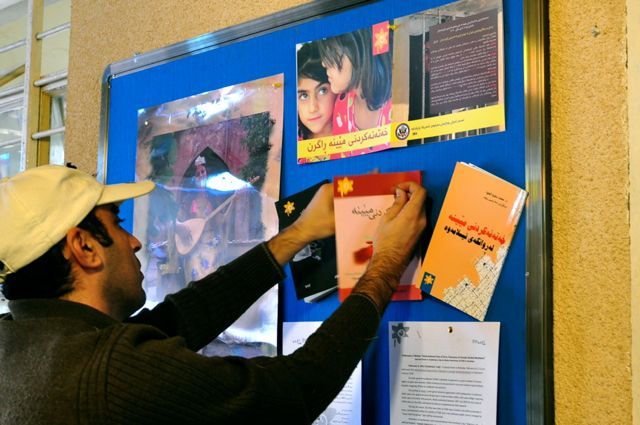
Countering Female Genital Mutilation (FGM) in Iraq
New Study: Almost 100 percent women mutilated in region of Oman – Time to act!
23.8.2018. The newest survey on female genital mutilation (FGM) in Oman bears shocking results: 95,5 percent of women reported to be mutilated. For the survey 200 women of different ages and educational backgrounds were interviewed in the governorate of Dakhiliyah during the last three months of 2017.
Report on Children’s right activism in Iran
14.11.2017. The London-based research lab “Small Media” has published a report on children’s rights and activism in Iran. The report gives a good overview on the issues child marriage, FGM and child labor, education and health. It discusses in detail some local associations and activist platforms, namely the Stop FGM Iran and Stop Early Marriage […]
Hormozgan, Iran: Meetings with scholars on FGM
26.10.2017. By Rayehe Mozafarian After numerous reports on FGM in Hormozgan by various associations and publishing materials, finally one of the provincial governors of Hormozgan acknowledged the problem and announced to act: Director General of the Office of Social and Cultural Affairs of Hormozgan Governorate has stated that we will have meetings with scholars on […]
Ending Female Genital Mutilation among Kurds: Couple Approach in Iranian Journal
7.6.2017. By Osman Mahmoudi Despite some successes in ending FGM among Kurdish people in Iran the rate of abandonment has been slow. Based on Osman Mahmoudi’s and Elham Houseini’s study on Psychosexual complications of Female Genital Mutilation for couples, published recently in the Journal of Kermanshah University of Medical Sciences, the couple developed now a new […]
Day of Zero Tolerance to FGM: Progress in Asia
Press release by WADI / Stop FGM Middle East & Asia February 6th 2017. On the seventh official International Day of Zero Tolerance to female genital mutilation (FGM), it has been 13 years, that WADI first brought the issue FGM happening in Asia, in this case Iraq, to the international agenda. In this last decade […]
Heartland study shows steep decline of FGM rates in Iraqi Kurdistan
10.1.2017. By Stop FGM Middle East. A study by the Heartland Alliance in cooperation with Unicef and the High Council of Women Affairs shows a dramatic decrease in rates of female genital mutilation (FGM) in Northern Iraq when comparing mothers and daughters. Among mothers surveyed 44,8% reported to be cut compared to 10,7% of their […]
Short film: Razor and Tradition
26.10.16. Our partner Rayehe Mozafarian made a short film about FGM in Iran which shows that it is still done in the villages to curb a girl’s lust and desire. But the tradition is fading because apparently some Mollahs have recommended to stop it (with English subtitles).
Survey: Majority of religious leaders pro FGM in Kermansheh, Iran
11.8.2016. By Stop FGM Middle East. A recent survey among Sunni religous scholars in the Iranian province of Kermansheh shows that a majority of them (67%) believe that “female circumcision” is religiously obligatory or at least recommended for girls and women. In this province in the West of Iran, female genital mutilation (FGM) is practiced […]
How a religious ruling seems to have stopped FGM in the 1950s in Ahwaz, Iran
9.8.2016 By Stop FGM Middle East. Two new studies shed more light on the practice of Female Genital Mutilation (FGM) in the Middle East. For the first time, a study explores whether FGM is practiced in Syria – and comes to the conclusion that no evidence of its existence can be found. Another study explores […]
Iran: New book about FGM is distributed among health workers
5.7.2016. By Osman Mahmoudi. The practice of female genital mutilation (FGM) affects Kurdish women and girls in the Iranian province of Kermanshah and continues within a complex web of social, cultural and economic justification. It is medically unnecessary and has adverse physical, sexual and psychosocial consequences.
Sahiyo: No, even ‘symbolic’ or ‘mild’ female genital cutting is NOT okay
2.7.2016. Should mild forms of Female Genital Cutting (FGC) be legalised? Should supposedly “harmless” nicking or slicing of clitoral tissue be medicalised, simply because getting communities to completely stop FGC happens to be a very difficult task? There has always been some support for mild, medicalised FGC, chiefly from communities that claim to practice female […]
Sahiyo: Bohra Men Speak Out to Save Their Daughters from Female Genital Mutilation
27.6.2016. The fatwa given during the Zikra majlis by Syedna Mufaddal Saifuddin in favor of female genital cutting dug up the wound in my heart, which is also the reason I am writing this post. Looking at parts from the audio clip leaked from the majlis, at one point, Syedna Mufaddal Saifuddin says what translates […]
Malaysia: female genital mutilation on the rise
22.6.2016. By Zofia Reych Walls in the reception of the Global Ikhwan clinic in Rawang, north of Kuala Lumpur, are pale pink and a nice, if medical, scent is hanging in the air. A fashionable headscarf conceals the black hair of Najwa, a 24-year old woman, standing at the counter. She is wearing high heels […]
LA Times: A rebellion inside a small Indian sect seeks to end a brutal custom: female genital mutilation
12.6.2016. By Shashank Bengali and Parth M.N. When she was 7, Saleha Paatwala’s grandmother took her out for what she thought would be a party. “I was told it would be a huge gathering where kids like me would also be,” Paatwala said. Instead she found herself in a dark, messy room where three other […]
Promosaik: Genitalverstümmelung macht die ganze Gesellschaft krank
25.04.2016. Von Milena Rampoldi Hannah Wettig, Projektleiterin bei Stop FGM Middle East gibt uns ein eindrückliches Interview. Es ist wichtig hervorzuheben, wie FGM (female genital mutilation – Weibliche Genitalverstümmelung) ein schwerer Verstoß gegen die Kinder- und Frauenrechte ist und dass FGM uns alle als Gesellschaft weltweit betrifft. Wir müssen aufdecken, wie FGM gerechtfertigt und sogar […]
Donation
Last Press Statements »
-
Putting the spotlight back on FGM in the Middle East – Wadi at the Women Deliver Conference 2026
-
FGM in Iraq: More research needed after succesful campaign in Kurdistan led to ban of harmful practice
-
Conference on 6th of Feb: Long-term approach to eradicate FGM in Iraqi Kurdistan yields results
-
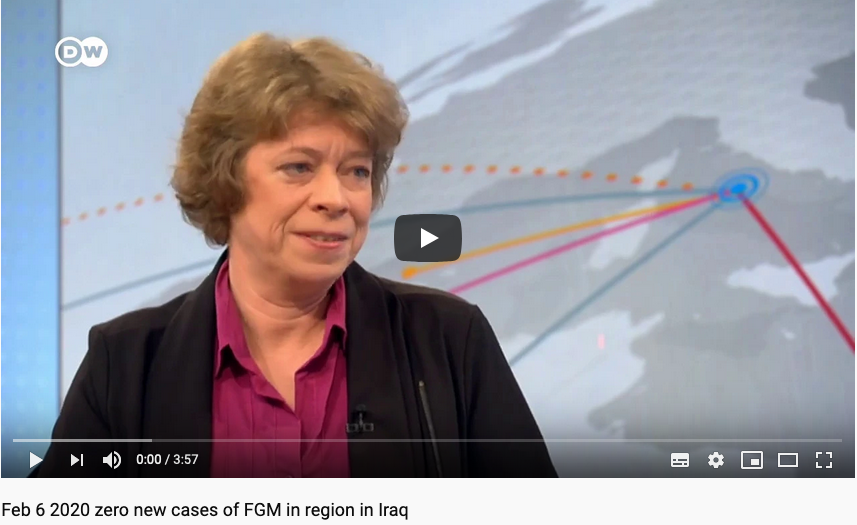
Feb 6: Wadi speaks on DW about what made success in Kurdistan possible
-
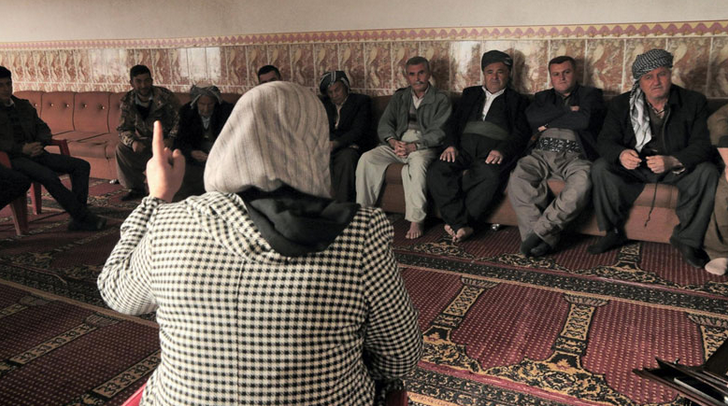
6th of Feb: WADI announces FGM has dropped to zero in highly effected region in Iraqi Kurdistan
-

Oman bans unexpectedly Female Genital Mutilation
-
Study finds: FGM is practiced by Saudi women